
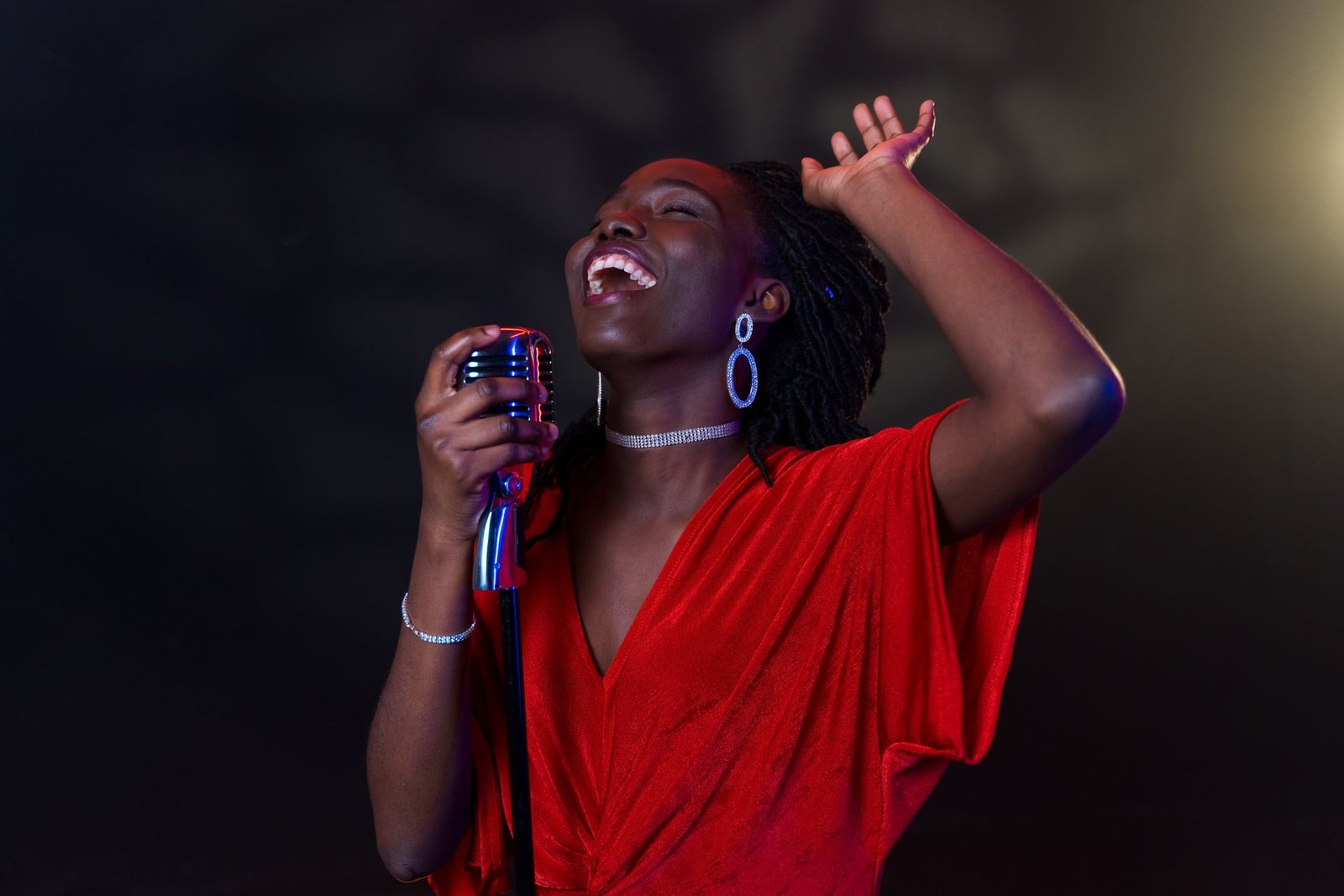
It was supposed to be a celebration. Reble, the rapper and singer whose voice helped make Dhurandhar one of the year’s defining films, was on stage in Guwahati on Thursday night, performing for a packed room at the PULSE 2026 Awards. Seconds later, the night took a frightening turn — and the video of what happened has now been watched by millions.
The footage, which spread across social media within hours, shows Reble — real name Daiaphi Lamare — dancing on stage as she performs her track “Run Down The City” when a drone suddenly swoops in and strikes her in the face. The impact is visible and shocking. The drone crashes, the music stops, and Reble, startled and clearly shaken, walks off the stage without saying a word. The clip ends there, but the questions it raised have kept spreading ever since.
The incident took place on Thursday, November 26, at Hatisila in Guwahati, Assam. Reble was one of the headline performers at the PULSE 2026 Awards, an event that had drawn a large crowd and plenty of cameras. Drones are a familiar sight at big live shows now — they hover above the stage, capturing sweeping shots for the event’s own coverage and for the audience’s phones. On this occasion, something went badly wrong. The drone flew low and directly into the performer’s face, and the video captured by an audience member, Instagram user Zaman Diaries, shows the exact moment of impact and Reble’s stunned reaction as she leaves the stage.
Fans were quick to flood social media with messages of concern. The video has been shared thousands of times, with many viewers asking the same thing: is she all right? As of now, there has been no detailed public statement about any injury, and that silence has only added to the worry. What is clear from the footage is that the blow was direct and forceful enough to bring the performance to an abrupt halt. For a singer mid-song, mid-dance, in front of a live audience, it was a jarring and genuinely frightening moment — and the fact that it happened on camera, in front of thousands of people watching both in the room and online, has made it impossible to look away from.
Reble’s sudden fame makes the incident hit even harder. The singer, who hails from Meghalaya, was until recently known mainly within the north-east music scene. That changed with Dhurandhar, Aditya Dhar’s blockbuster, for which Reble contributed to the music and collaborated on lyrics with composer Shashwat Sachdev. Her work on the film’s soundtrack brought her to a national audience almost overnight, and the PULSE 2026 Awards performance was one of her biggest stages yet — a homecoming of sorts, in the north-east, in front of a crowd that had come to see her. Instead of a triumph, the night ended with her walking off stage in shock, and a clip of her worst moment on the job travelling further and faster than any of her songs ever have.
That is the cruel arithmetic of the viral age. A performer can spend years building a career, and a few seconds of footage can redefine it in a day. Reble’s team and the event organisers have not yet said publicly what went wrong with the drone, or who was operating it, or what safety measures were in place. Those are the questions that will follow this story in the coming days, and they matter. Drones at concerts are not new, but the rules around them — how close they can fly to performers, who is allowed to operate them, what happens when the technology fails — are still catching up with how common they have become. A drone is a flying object with spinning blades, and when it is hovering over a stage where someone is dancing, the margin for error is small.
The incident also underlines how much has changed for Reble in a matter of months. Before Dhurandhar, she was a respected voice in the north-east’s independent music scene, known for a style that mixes rap, melody and the cadences of home. The film changed the scale of everything: suddenly her songs were being heard in cinemas across the country, her name was being searched by people who had never been to Meghalaya, and invitations to big stages like the PULSE Awards followed. “Run Down The City”, the track she was performing when the drone struck, is exactly the kind of high-energy number that thrives in a live setting — movement, attitude, crowd interaction. It is also exactly the kind of performance that puts a singer in the path of a low-flying camera drone, moving across a stage rather than standing still behind a microphone. The irony is hard to miss: the very energy that makes her live show worth filming is what put her in harm’s way.
The wider conversation is already under way. Live events in India have grown bigger and more spectacular every year, and the pressure to capture dramatic aerial footage has grown with them. But performers have a right to expect that the stage is safe, and audiences have a right to expect that the show they paid for will not end with someone being hurt. The PULSE Awards incident is a reminder that the spectacle around a performance can become a hazard in itself, and that the people operating the cameras are part of the safety equation, not separate from it.
For now, the focus is on Reble herself. The outpouring of support online has been genuine and immediate — fans, fellow musicians and film watchers sending messages, sharing the clip with words of concern, and hoping for news that she is doing well. She earned her moment in the spotlight the hard way, through her work on one of the year’s biggest films, and nobody who watched that video wanted her big night to end the way it did. The hope now is that the next clip of Reble to go viral is one of her back on stage, finishing the song — on her own terms, and safely.