
Fourteen migrants have been found dead on a boat carrying about 100 people that was rescued near Spain’s Canary Islands, in the latest tragedy on a migration route that has overwhelmed the tiny island of El Hierro.
The Spanish maritime rescue service said on Friday that between eight and 10 bodies were found on board when the boat was discovered 39 nautical miles, about 72 kilometres, south of El Hierro. Spanish news agency EFE later reported that 14 bodies had been brought ashore. Six people were airlifted to hospital in serious condition.
The boat was being towed to the port of La Estaca. In a separate incident, 84 survivors from another boat disembarked at the island’s La Restinga port, home to a migrant reception centre and field hospital where most migrant boats reaching the island have been processed. Some survivors were carried ashore on stretchers, while others were wrapped in thermal blankets.
The tragedy comes as migrant arrivals to the Canary Islands have accelerated since October, hitting a record 2,100 people in a single day on November 25, most of them coming to El Hierro, an island with a population of just 11,400.
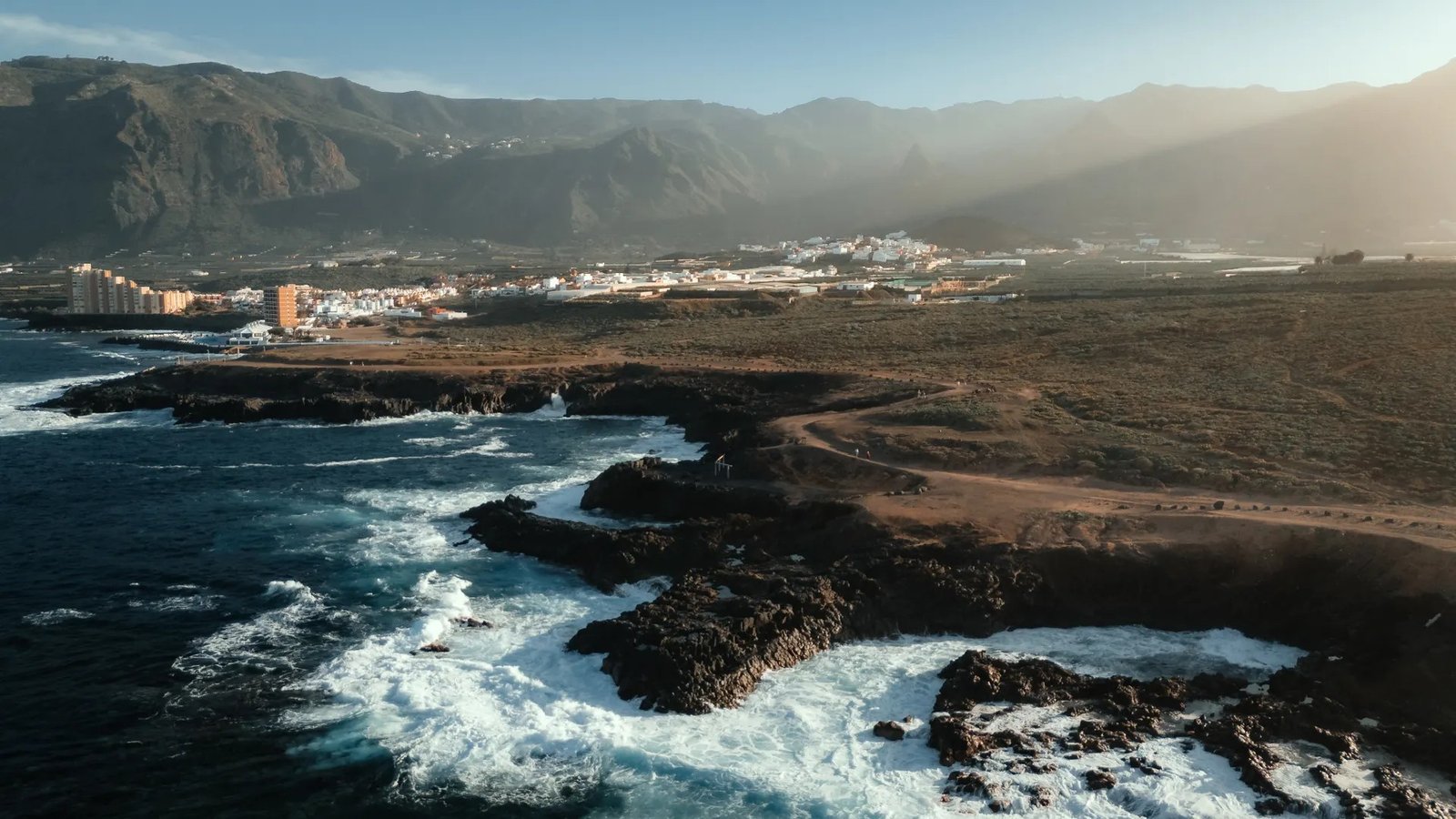
El Hierro is the smallest and westernmost of the Canary Islands, a volcanic speck in the Atlantic off the coast of West Africa. It has become the primary entry point for migrants crossing from Senegal, Mauritania and other West African countries, drawn by its proximity to the African coast and the relative calm of its waters compared with the open Atlantic.
The crossing is still deadly. Migrants travel in crowded wooden boats, often for days, with limited food and water and no navigation equipment beyond a phone. When a boat’s engine fails or the weather turns, there is no help for hours. The people found dead on Friday’s boat had survived the crossing itself, only to die in sight of land.
The rescue service’s figures tell only part of the story. Between eight and 10 bodies were found on board, but the final toll, 14 according to EFE, suggests more were found as the boat was brought ashore. Six people were flown to hospital in serious condition, and their survival is not guaranteed. The 84 survivors who disembarked at La Restinga were the lucky ones.
The tragedy comes just days before Sunday’s general election in Spain, where immigration has become a defining campaign issue. The record arrivals have turned the Canary Islands into a political battleground, with parties arguing over whether the government’s response has been too slow, too soft, or too harsh.
For the people of El Hierro, the politics are secondary to the practical reality. An island of 11,400 people cannot absorb thousands of arrivals without strain. The reception centre at La Restinga and the field hospital were built for a trickle, not a flood. Volunteers, medical staff and local officials have been working around the clock, and still the boats keep coming.
The surge has several causes. Conflict and poverty in the Sahel have pushed more people to leave. Smuggling networks have become more organised, and the route to the Canaries, once a secondary option, has become the main one as other Mediterranean crossings have been tightened. The weather in late autumn, calmer than in winter, has also encouraged more departures.
Spain’s government has been under pressure from both sides. Humanitarian groups say the response has been inadequate, with migrants held in overcrowded facilities and asylum claims processed too slowly. Critics of immigration say the arrivals are out of control and demand tougher measures, including more deportations and more cooperation with African governments to stop departures.
The European Union has been watching closely. The Canary Islands route is now one of the busiest irregular migration corridors into Europe, and Brussels has been pressing Madrid and African governments to do more to manage it. But the fundamental problem remains: as long as people are willing to risk their lives to reach Europe, boats will keep arriving.
The route to the Canaries has grown in importance as other crossings have become harder. The central Mediterranean route from Libya and Tunisia to Italy has been squeezed by deals with North African governments and tougher patrols, pushing smugglers and migrants toward the Atlantic. The journey from Senegal or Mauritania to the Canaries is longer and more exposed than a Mediterranean crossing, but it avoids the Libyan coast, where migrants face detention, extortion and abuse. For many, the Atlantic feels like the safer gamble, even though the odds are still terrible.
Spain has responded with a mix of rescue, reception and diplomacy. Its maritime rescue service is among the most active in Europe, and its crews have saved thousands of lives. At the same time, Madrid has been negotiating with West African governments to prevent departures and accept returns, with mixed results. The agreements take time to negotiate, and the smugglers adapt faster than the diplomats.
The 14 who died on Friday were part of that calculation. They paid smugglers, boarded a crowded boat, and set out across the Atlantic in the hope of a better life. They made it to within 39 nautical miles of El Hierro before the journey killed them.
Their deaths are a reminder that behind every arrival statistic is a human story. The record of 2,100 people in a single day sounds like a number. The boat found on Friday sounds like a number too. But each of those numbers is a person, with a family, a reason for leaving, and a hope that did not survive the crossing.
The search for the dead is over. The boats will keep coming, the island will keep receiving them, and Spain will keep arguing about what to do. For the 14 who died within sight of El Hierro, the argument came too late.