
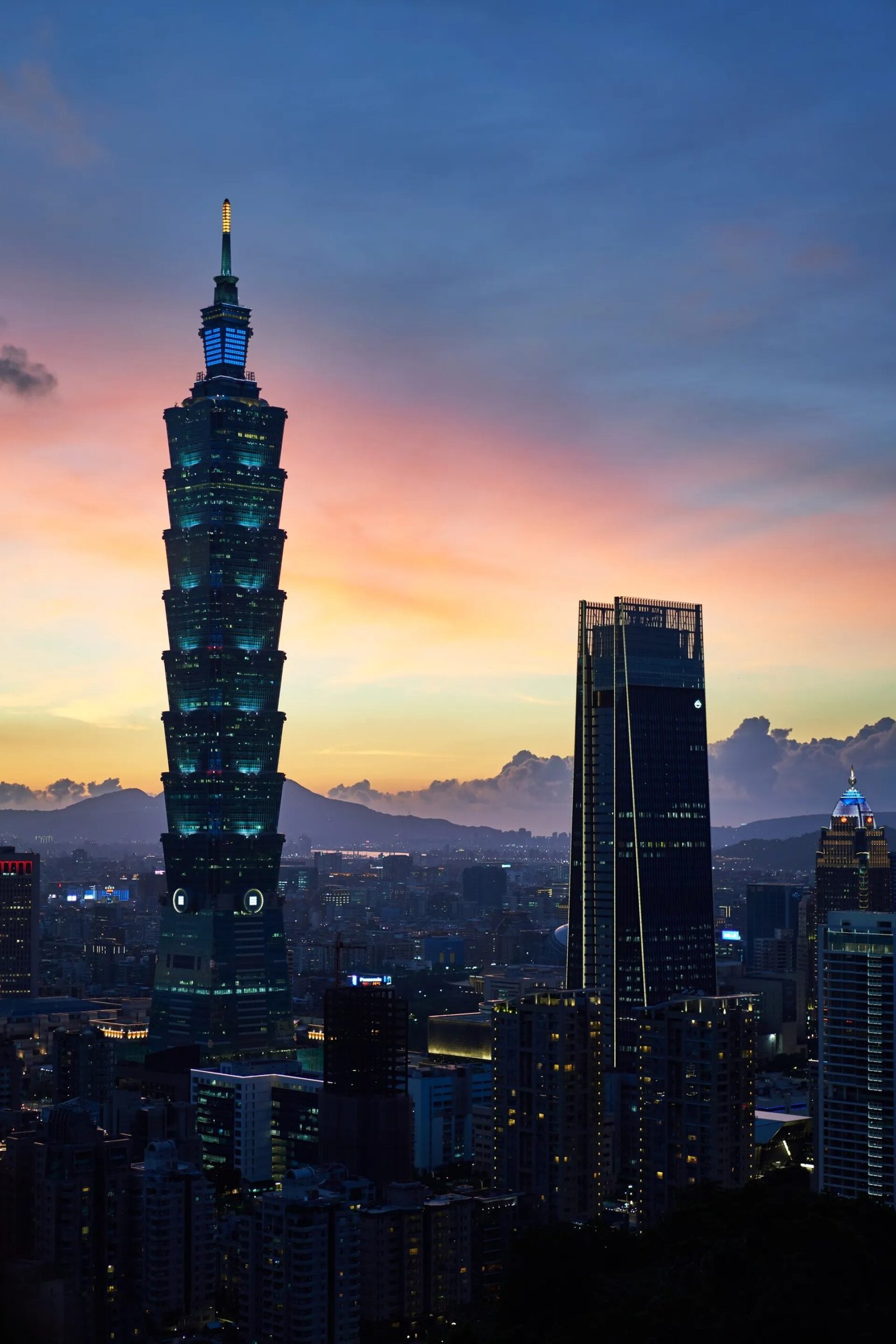
Taiwanese voters headed to the polls on Saturday for local elections that will test the strength of President Lai Ching-te’s ruling party and reshape the political field ahead of the 2028 presidential contest, with China watching closely.
Nearly 19.6 million people are eligible to vote, about 85 percent of the population, to elect mayors and county chiefs across 22 cities and counties, along with more than 11,000 other local officials. Polling stations opened at 8 a.m. and were scheduled to close at 4 p.m., with initial results expected in the evening.
The elections are also a referendum of sorts, with voters deciding a nuclear referendum alongside the local races. Around 20 million people are eligible to vote in the referendum, which has a lower voting age than the local elections. About 600,000 of those eligible to vote on Saturday are first-time voters.
The vote is widely seen as a midterm test of support for Lai, leader of the independence-leaning Democratic Progressive Party, whom Beijing has branded a separatist. Lai took office in 2024, securing a third consecutive presidential term for the DPP, but his party lost its majority in the legislature, and the first two years of his administration have been marked by gridlock with the opposition-controlled parliament.
The question on Saturday is whether the DPP can translate its record run of three straight presidential victories into gains at the local level, where the opposition Kuomintang has long been stronger. The KMT currently controls most of Taiwan’s 22 city and county governments, while the DPP holds five. For the KMT, which advocates friendlier ties with China, the results could reorder the field of politicians vying to challenge Lai in 2028, a contest Beijing is closely watching.
The mayoral race in Taipei, the capital, is among the most closely watched. Incumbent KMT Mayor Chiang Wan-an is seeking re-election against DPP candidate Puma Shen, a scholar-turned-lawmaker whose research has focused on disinformation and alleged Chinese influence operations targeting the island. The race has become unexpectedly competitive, and the DPP is seeking to win the capital’s mayoral office for the first time since 1994.
The contest is also seen as a clash between two potential future presidential candidates. Chiang, a member of the Chiang family that once ruled Taiwan, is widely viewed as a rising star in the KMT. Shen, a first-term legislator, has become one of the DPP’s most prominent voices on national security. Whoever wins Taipei on Saturday will carry significant momentum into 2028.
Other closely watched races include New Taipei, Taiwan’s most populous municipality, where the main contenders are former Taipei deputy mayor Lee Shu-chuan of the KMT and DPP lawmaker Su Chiao-hui. The two parties are also competing for control of key urban centres, including Taoyuan, Taichung, Tainan and Kaohsiung.
In Kaohsiung, southern Taiwan’s largest city, the two front runners are the DPP’s Lai Jui-lung and the KMT’s Ko Chih-en, who are vying to succeed incumbent DPP Mayor Chen Chi-mai.
In total, voters will choose mayors in Taiwan’s six largest cities, Taipei, New Taipei, Taoyuan, Taichung, Tainan and Kaohsiung, as well as mayors and magistrates in 16 other cities and counties. Also at stake are 919 county or city council seats, 198 township chief seats, six Indigenous district chief positions, 50 Indigenous council seats in municipalities, 2,076 township council seats and 7,780 borough chiefs.
The Central Election Commission set up 18,244 polling stations and mobilised more than 300,000 election workers for the vote, a logistical operation that reflects the scale of Taiwan’s “nine-in-one” elections, in which voters cast ballots for nine different levels of local government at once.
China’s shadow hangs over the vote, as it does over every election in Taiwan. Beijing sees Lai as a separatist and has criticised Shen directly. The KMT’s chairperson, Cheng Li-wun, made a high-profile trip to China earlier this year, meeting with Chinese leader Xi Jinping, and has said she will continue the KMT’s coalition with the Taiwan People’s Party.
The KMT argues that friendlier ties with Beijing are the best way to preserve peace and prosperity. The DPP argues that Taiwan must stand firm against Chinese pressure and strengthen its defences. The local elections will not settle that argument, but they will give both parties an insight into their respective strengths and weaknesses going into 2028, when Lai is likely to seek a second four-year term.
For ordinary voters, the local elections are about more than cross-strait relations. Mayors and county chiefs decide how roads are repaired, how schools are run, how garbage is collected and how local budgets are spent. The “nine-in-one” format means a single trip to the polling station can shape daily life in a dozen different ways.
The nuclear referendum adds another layer to the vote. Taiwan’s energy future has been a running argument for years, with supporters of nuclear power pointing to energy security and opponents citing safety and waste. The referendum will not decide the issue on its own, but its result will shape the debate in the legislature and in the 2028 presidential campaign.
The Taiwan People’s Party, which holds the balance of power in the legislature after the 2024 elections, is also watching the local results closely. The party won only a small share of local seats in the last election, and Saturday’s vote will show whether it can build a local base to match its national profile, or whether Taiwan’s politics remain a contest between the DPP and the KMT.
But the national stakes are impossible to ignore. A strong DPP showing would vindicate Lai’s leadership and strengthen his hand against an opposition-controlled legislature. A strong KMT showing would embolden the opposition and reshape the race to challenge Lai in 2028.
As polls closed on Saturday afternoon, the counting began, and Taiwan waited for the results that will set the course for the next two years. The island’s democracy, vibrant and fiercely contested, was on full display once again, and the world, including Beijing, was watching.