
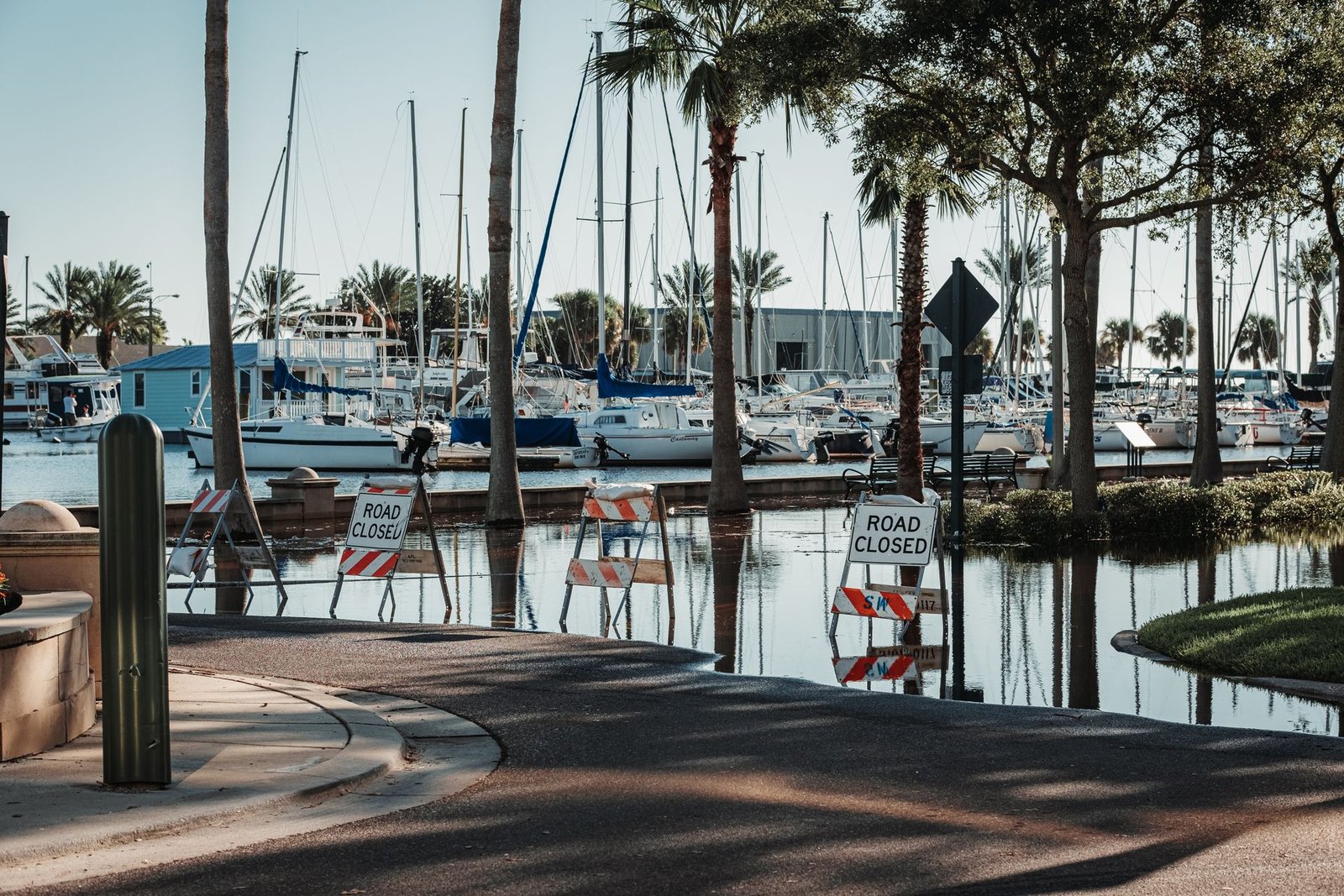
Thanksgiving is supposed to be about the table, the turkey and the drive home. This year, for hundreds of thousands of people along the East Coast, it was about the water coming in, the lights going out and the roads disappearing under the sea. A powerful nor’easter slammed into the coast on Thanksgiving Day, Thursday 26 November, and by the time it pulled away it had delivered record-breaking coastal flooding, damaging winds and one of the biggest holiday power outages in years.
The storm stretched from Missouri to Massachusetts, but its worst damage was concentrated along the Mid-Atlantic and the Northeast. It arrived as a deep low pressure system, dragging bands of heavy rain and strong wind from Virginia through New Jersey and into New England, and it timed its worst hours cruelly — the heaviest rain and the strongest winds coincided with the evening high tide on Thanksgiving itself.
The power numbers tell the story of how hard it hit. Outages peaked at more than 900,000 customers on Thanksgiving Day, according to poweroutage.us, as trees and power lines came down across the region. Pennsylvania had the most customers without power, followed by Missouri, where snow caused its own problems. By late Friday evening, crews had worked the total down to around 230,000 — still an enormous number of homes sitting dark on a holiday weekend — and in some places the work of restoring power stretched on through the weekend.
New Jersey took the brunt of it. Governor Mikie Sherrill declared a state of emergency across all 21 counties, effective from Wednesday evening, warning of damaging winds, heavy rain, coastal flooding and potentially prolonged power outages. More than 100,000 customers in the state lost power on Thanksgiving alone. Atlantic City saw two to three feet of water in some low-lying neighbourhoods. In Stone Harbor, the flooding was so severe that the borough effectively shut down, with water lapping at front doors and streets closed to traffic. One resident of Ocean City, New Jersey, described floodwater surrounding her property and keeping her family inside for six hours.
Further south, the flooding turned into rescues. In Norfolk, Virginia, waist-high floodwaters prompted at least 39 water rescues. Water rescues were reported all the way from New York to Virginia. In New York Harbor, divers searched an overturned Jeep that had gone into the water off Staten Island on Thursday afternoon. In Hampton, Virginia, the storm toppled a beloved landmark at Grandview Beach — a weathered fishing pier — and in Virginia Beach part of a fishing pier collapsed, closing a three-mile stretch of beach including the boardwalk.
The wind was as destructive as the water. AccuWeather reported gusts reaching 72 miles per hour at Stingray Point in Virginia, with coastal areas of New Jersey and Long Island bracing for gusts up to 80 mph as the storm pushed north. In New York City, sustained winds of 30 to 40 miles per hour were forecast for Thanksgiving Day, with gusts above 30 mph recorded in Central Park. Mayor Zohran Mamdani told a safety briefing that the winds would be strong enough to down tree limbs and power lines, and the city warned that the worst would strike later on Thursday, when strong winds, heavy rain and the evening high tide arrived together. Coastal flood warnings were posted from New Jersey to Virginia, covering all five boroughs of New York City.
The storm also forced major changes to the holiday itself. New York City’s 100th Macy’s Thanksgiving Day Parade was postponed until Saturday morning because of the dangerous wind conditions — the first postponement in the event’s century-long history — and Philadelphia cancelled its Thanksgiving Day Parade, billed as the nation’s oldest. Thousands of flights were delayed and hundreds cancelled, according to FlightAware, as the storm snarled travel on one of the busiest travel days of the year.
Nor was the damage confined to the coast. The same sprawling system dropped wet snow as far south as the Tennessee Valley, with freezing rain moving across northern New England. Parts of Tennessee were under a winter storm warning for up to an inch of snow on Friday, after rain turned to light snow on Thanksgiving. In eastern Missouri, as much as 15 inches of snow fell — and in Wentzville, the roof of an ice arena caved in under the weight of it. The building was empty at the time.
By Friday, the heavy rain over flooded East Coast communities began to ease, and power was slowly restored to hundreds of thousands of customers. The storm system was expected to leave the region on Saturday morning, bringing drier conditions into Sunday. But for the towns along the Jersey Shore and the Virginia coast, the clean-up was only beginning. Ocean City, Maryland, reported building damage and downed power lines. Roads that had been closed by floodwater needed to be checked before they could reopen. Homes that had taken on water needed to dry out.
The nor’easter was not an isolated freak. It arrived at the end of a November that had already delivered record rain events in Florida, California, Arizona and Colorado, and forecasters say the pattern behind it — a historically strong El Niño driving an unusually active southern jet stream — is only getting started. December is expected to bring more of the same kind of storm to the same parts of the country, and the East Coast, having just spent its Thanksgiving bailing out, will be watching the forecast closely.
For now, the numbers from this one storm are stark enough on their own: 900,000 customers without power at the peak, 39 water rescues in a single Virginia city, a borough shut down, a pier in pieces, and a holiday that hundreds of thousands of families spent in the dark. Thanksgiving 2026 will not be remembered on the East Coast for the food. It will be remembered for the water.