
A magnitude 6.9 earthquake shook the Andes in central Peru on Friday evening, rattling buildings in the capital, Lima, and sending residents rushing into the streets, though officials said there were no immediate reports of damage or casualties.
The earthquake struck at 7:09 pm local time, according to the United States Geological Survey, which put its epicentre in the Andes, 34 kilometres north of Junin, at a depth of 108 kilometres. Peru’s own geophysics institute measured the depth slightly differently, at 129 kilometres, but the two agencies agreed on the essentials: this was a powerful earthquake, centred deep beneath the mountains of central Peru, and strong enough to be felt hundreds of kilometres away.
In Lima, the shaking was unmistakable. The capital sits on the Pacific coast, a long way from the epicentre in the high Andes, but the tremors rolled through the city clearly enough to send people out of their homes and offices and into the streets. Videos shared on social media showed residents standing in the open, waiting for the shaking to pass, while the word for tremor in Spanish, temblor, quickly began trending online in Peru and in neighbouring countries.
Peru’s Geophysical Institute said no damage or casualties had been reported in the hours after the earthquake. That is the first piece of good news after any large earthquake, but officials were careful to add that assessments were still under way. In a country as mountainous as Peru, it can take time for reports to come in from remote towns and villages, especially at night, and the picture can change as the hours pass.
The depth of the earthquake is one of the main reasons it appears to have caused so little damage. At more than 100 kilometres below the surface, the energy of the quake had a long way to travel before it reached the towns and cities above. Deep earthquakes are often felt over a very wide area, which is why people in Lima noticed this one so clearly, but the shaking at the surface tends to be gentler than it would be from a shallow earthquake of the same size.
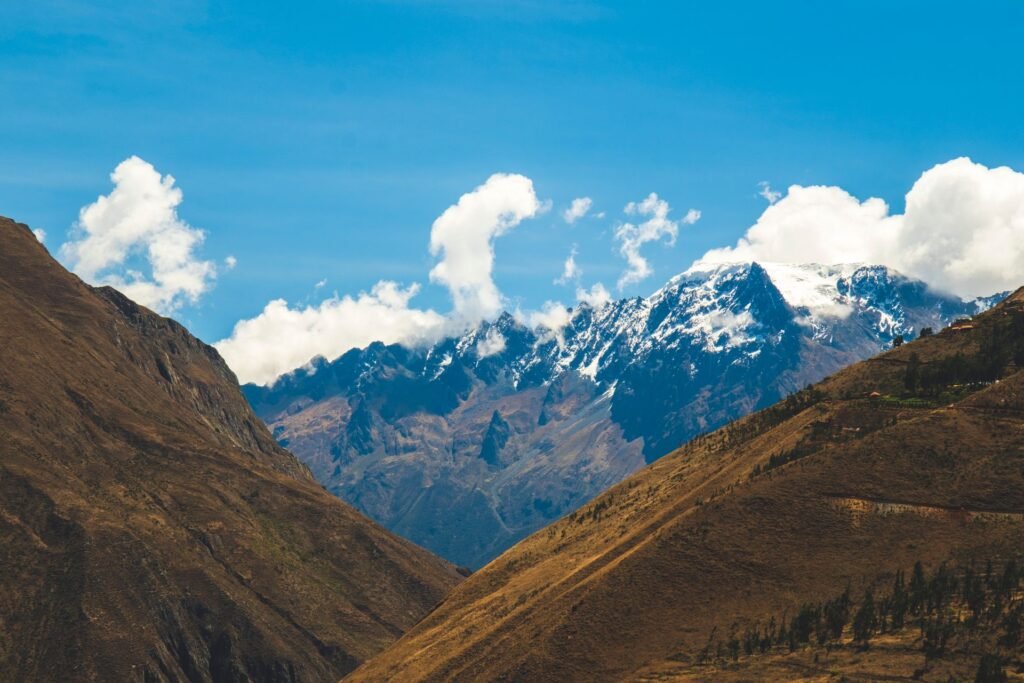
The location also helped. The epicentre was in the Andes, in a sparsely populated part of the Junin region, rather than beneath a major city. The Andes are the spine of Peru, a chain of high mountains running down the centre of the country, and much of the land around Junin is open countryside, farmland and small settlements rather than dense urban areas. That does not mean nobody was at risk, but it does mean far fewer people were exposed to the strongest shaking than would have been the case if the same earthquake had struck under Lima itself.
Peru is one of the most earthquake-prone countries on Earth, and its people live with the risk every day. The country sits on the Pacific Ring of Fire, the horseshoe-shaped belt of volcanoes and fault lines that circles the Pacific Ocean and produces most of the world’s large earthquakes. Off Peru’s coast, the Nazca tectonic plate is slowly sliding beneath the South American plate, a process that builds up enormous pressure over decades and then releases it suddenly in earthquakes. It is the same process that has shaped the Andes themselves, pushing the mountains upward over millions of years.
That history gives Peruvians good reason to take any strong earthquake seriously. The country has suffered some of the deadliest earthquakes in the history of the Americas. In 1970, an earthquake in the Ancash region killed around 70,000 people, many of them buried by a landslide that swept down from the mountains and destroyed the town of Yungay. In 2007, an earthquake off the coast near Pisco killed more than 500 people and damaged or destroyed tens of thousands of homes. Those memories are still fresh in Peru, and they explain why people in Lima did not hesitate to leave their buildings on Friday evening, even though the shaking was not violent.
The authorities in Peru have built one of the more developed earthquake response systems in Latin America, with regular drills in schools and workplaces, building codes that require new construction in Lima and other cities to withstand strong shaking, and a national emergency operations centre that coordinates the response. When an earthquake strikes, the first task is to check the areas closest to the epicentre, then the hospitals, schools and other critical buildings, and then the roads and bridges that connect mountain communities to the rest of the country.
There was no tsunami warning after this earthquake, and none was expected. Tsunamis are caused by earthquakes under the sea floor that push large volumes of water upward, and this earthquake was both deep and well inland, beneath the Andes rather than beneath the Pacific. That removed one of the main dangers that usually follows a large earthquake on Peru’s coast, and it meant the emergency services could focus entirely on the shaking itself.
Seismologists will now be watching for aftershocks, the smaller earthquakes that often follow a large one as the ground settles. Aftershocks can continue for days or even weeks, and while they are usually weaker than the main earthquake, they can still be felt and can still cause damage to buildings that were weakened by the first shock. People in Junin and in Lima have been advised to stay alert and to be ready to move to open ground if they feel the earth move again.
The answer, for now, appears to be reassuring. No one was reported killed, no major damage was reported, and the earthquake, for all its power, seems to have passed without the kind of tragedy that Peru has known too often in the past. The depth of the quake and its location in the mountains spared the country this time.
But the earthquake is also a reminder that the risk has not gone away. The plates beneath Peru are still moving, and another large earthquake will come sooner or later. The best defence is the one Peru has been building for years: strong buildings, regular drills, and a population that knows what to do when the ground starts to shake.