
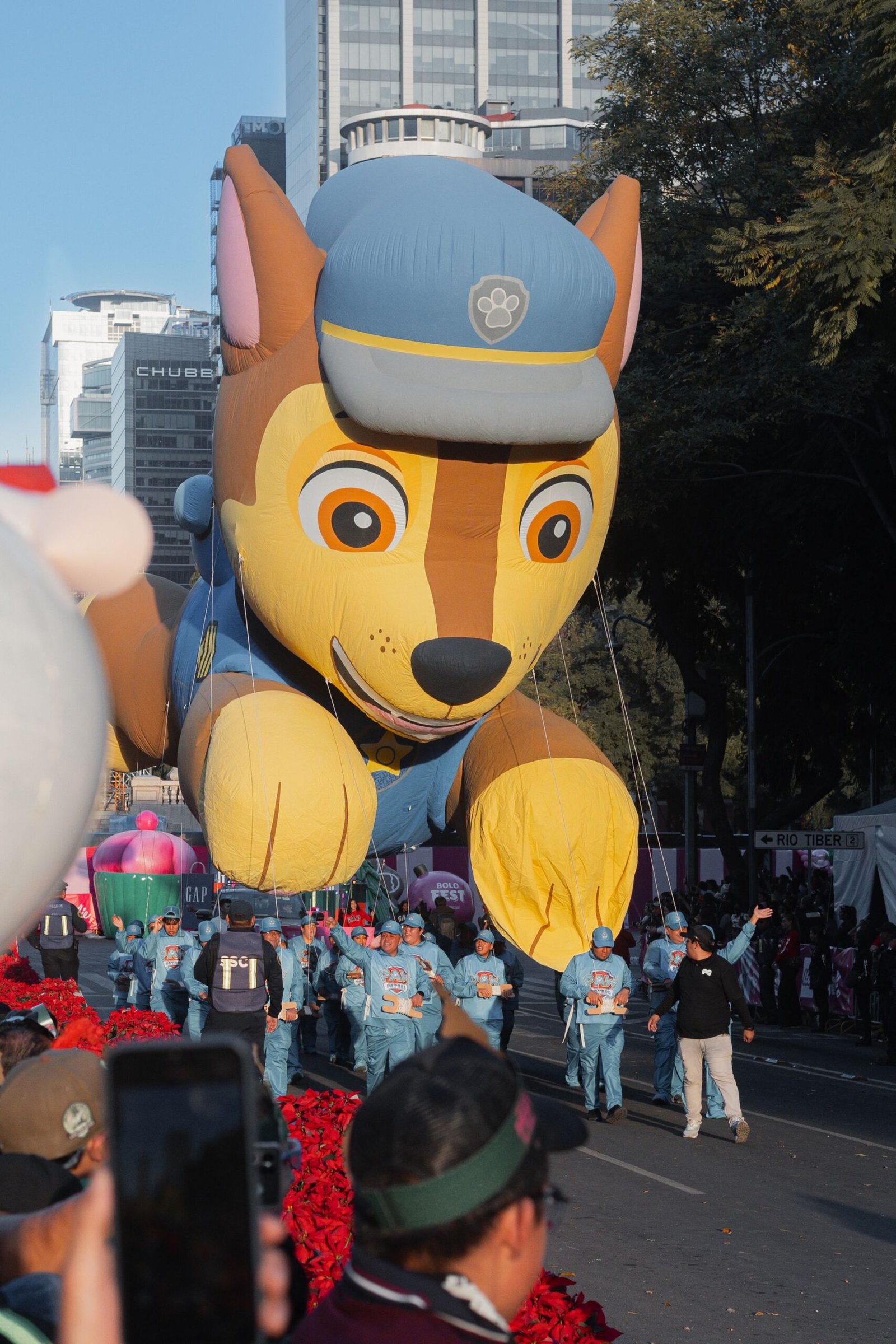
Macy’s has been planning its 100th Thanksgiving Day Parade for years. It has booked a record 100 inflatable elements, lined up the marching bands, the floats and the performers, and mapped out the same 2.5-mile route through Manhattan that ends at Herald Square. There is just one problem, and it is the size of a coastal storm: a nor’easter is bearing down on New York City, and it arrives on Thanksgiving morning.
The parade itself is not in doubt. It will go on, rain or shine, parade executive producer Will Coss told ABC7 New York. It steps off at 8:30 a.m. on Thursday, November 26, and runs until noon, airing on NBC and Telemundo and streaming on Peacock. What is very much in doubt is whether the stars of the show — the giant character balloons that float above the crowds — will be able to fly at all.
The forecast is a race against the clock. AccuWeather expects sustained east-to-northeast winds of 12 to 25 mph during the parade, with gusts of 20 to 30 mph, strengthening as the morning goes on. The National Weather Service has issued a High Wind Watch for New York City beginning at 10 a.m. on Thanksgiving, while the parade is still under way, calling for east winds of 25 to 35 mph with gusts up to 60 mph possible through 1 a.m. Friday. Rain is expected to spread into the area on Thursday morning and grow steadier and heavier later in the day, with the potential for street and highway flooding. The storm could rank among the ten heaviest Thanksgiving Day rains on record, and with a full moon just a couple of days earlier, strong onshore winds could also bring king tides and moderate to major coastal flooding at high tide.
That matters because New York City has strict rules about when the balloons can fly. The rules were written after the 1997 parade, when high winds sent a Cat in the Hat balloon crashing into a lamppost, injuring spectators. Since then, the giant balloons must stay grounded when sustained winds exceed 23 mph or gusts exceed 34 mph, and no balloon can be longer than 78 feet, wider than 40 feet, or taller than 70 feet. The final call is made by the NYPD, based on actual wind readings along the route on the morning of the parade.
By that standard, Thursday morning is right on the edge. Forecasters say conditions may still be below the safety limits when the parade steps off at 8:30 a.m., but NBC New York reported that gusts could reach or pass the threshold by 10 or 11 a.m. — while the parade is still marching. AccuWeather’s vice president of forecast operations, Dan DePodwin, put it plainly: “There is a significant risk that gusty winds ahead of the nor’easter cause the parade balloons to at least be lower than usual and it’s possible they are not able to fly at all.” Everything depends on the storm’s speed. If it moves a little slower, the worst of the wind may hold off until after the parade ends. If it speeds up, the balloons could be grounded before the last float reaches Herald Square.
This is not the first time weather has threatened the parade, and the event has a remarkable record of carrying on regardless. It has never been cancelled because of weather. The only cancellations in its history came in 1942, 1943 and 1944, when rubber and helium were needed for the war effort — which is why 2026 is the 100th parade even though the first one took place in 1924. Rain has soaked it, cold has frozen it, and wind has forced the balloons low before, but the parade has always gone ahead. That history is part of why millions of Americans treat it as a fixed point of Thanksgiving morning, as reliable as the turkey itself.
The 100th edition was meant to be a celebration, and on paper it still is. A record 100 inflatables, including the giant character balloons, are planned, alongside the floats, the marching bands, the Broadway performances and the celebrity appearances that have made the parade a television institution. The balloons are the heart of it, though. They are what children point at from the sidewalks and what the cameras linger on. If they fly low, or not at all, the parade will look very different — still festive, still fun, but missing the spectacle that defines it.
For the spectators planning to line the route, the advice is the same as it is every year, only more so: dress warm, expect rain, and arrive early. The crowds will be there whatever the weather, and the marching bands will play through it. The handlers who walk the balloons — hundreds of trained volunteers holding the ropes — will be watching the sky as closely as anyone. Their job is already one of the most demanding in the parade; in high wind, it becomes genuinely difficult, which is exactly why the city sets limits.
The 1997 accident is the reason those limits exist, and it is still talked about by everyone who works on the parade. A gust caught the Cat in the Hat balloon and drove it into a lamppost, which broke apart and injured spectators on the sidewalk below. It was a frightening day, and it changed the event permanently. The balloon size caps, the wind thresholds, the morning-of decision by the police — all of it came from that one afternoon. Nobody involved wants to repeat it, which is why the decision on Thursday will be made on readings, not on optimism. If the wind is over the line, the balloons stay down, and nobody will argue.
There is a strange symmetry to it. The 100th parade, the biggest in the event’s history, may be decided by a storm that nobody can control. Macy’s has spent months preparing for everything it can prepare for. The one thing it cannot prepare for is the wind. On Thursday morning, the decision will come down to a handful of wind readings taken along a Manhattan avenue, and to the judgment of the police officers standing on the route with anemometers in their hands.
Whatever happens, the parade will march. If the balloons fly, it will be a triumph. If they fly low, the crowds will cheer them anyway. And if they stay grounded, the 100th parade will still be remembered — not for the balloons that were missing, but for the storm that tried, and failed, to stop Thanksgiving’s biggest morning.