
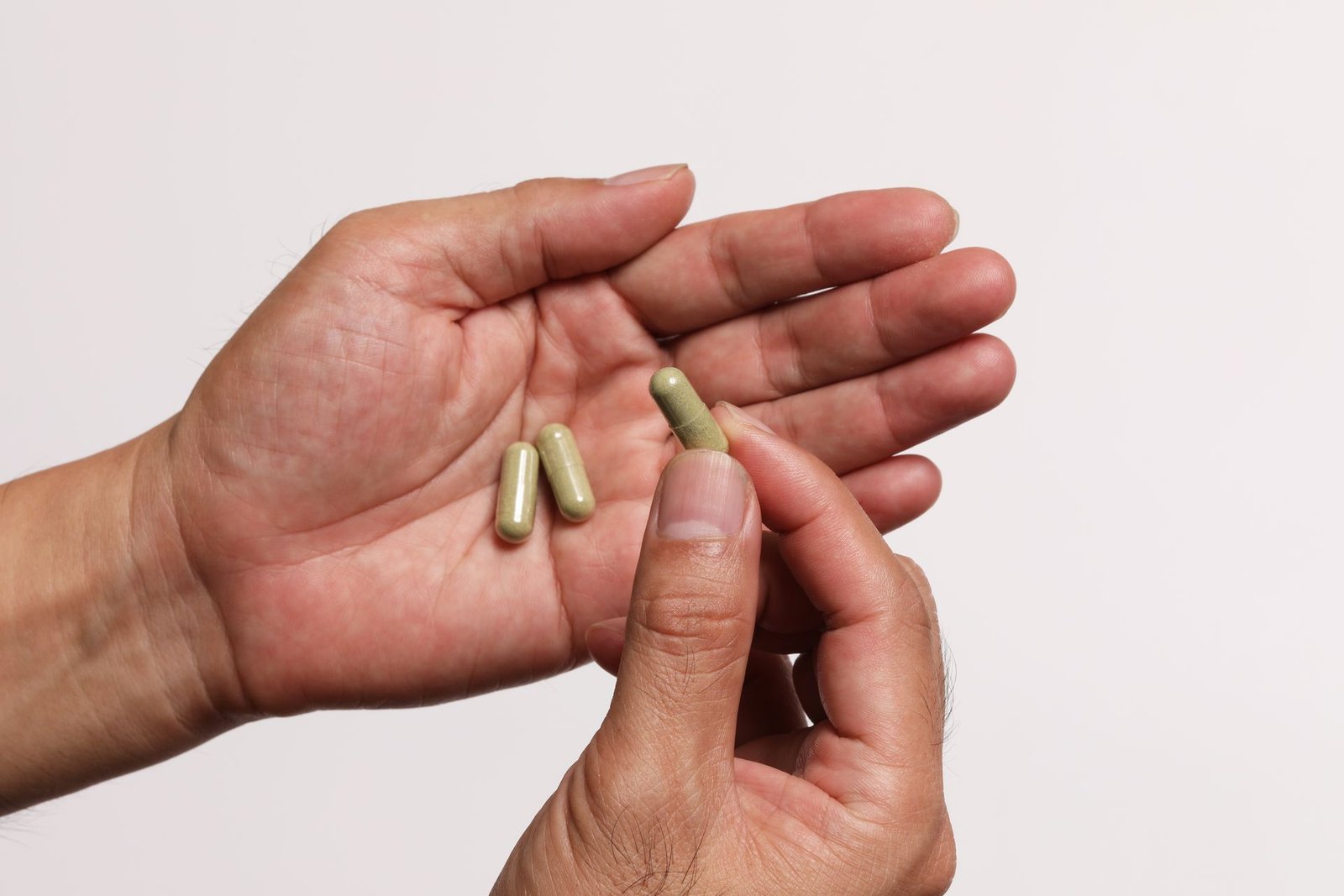
Walk into almost any gas station, smoke shop or liquor store in America and you will find them: small bottles, gummies, tablets and shots with names that promise energy, focus or pain relief, sold beside the crisps and the lottery tickets. They are kratom products, and the most potent among them are now the target of the biggest federal crackdown the industry has ever faced. A Drug Enforcement Administration restriction on concentrated 7-OH products could take effect at any moment, eight senators are demanding the agency go further, and the argument over a plant that millions of Americans use is coming to a head.
Kratom comes from the leaves of a tree in the coffee family, native to Southeast Asia, and it has been used there for generations by labourers seeking relief from pain and fatigue. Its effects come mainly from two compounds: mitragynine, and a far more potent relative called 7-hydroxymitragynine, or 7-OH. In the natural leaf, 7-OH occurs only in trace amounts. The products now worrying regulators are something else entirely: laboratory-concentrated 7-OH, sold in tablets, gummies, drink mixes and shots that can contain far more of the compound than any leaf ever would. Researchers say 7-OH acts on the brain much more like an opioid than traditional leaf powder does, and early evidence suggests it carries a higher risk of dependence.
The federal process has moved in fits and starts for more than a year. In July 2025, the Department of Health and Human Services and the Food and Drug Administration recommended that concentrated 7-OH be scheduled as a controlled substance. In July 2026, the DEA announced its intention to temporarily schedule 7-OH and three related substances. Then in August, the agency placed three semi-synthetic opioids derived from 7-OH, known as MGM-15, MGM-16 and mitragynine pseudoindoxyl, in Schedule I, the most restricted tier of the Controlled Substances Act, alongside heroin and LSD. The American Kratom Association sued the DEA on 26 August, arguing the rule could sweep in natural kratom products containing trace amounts of the compound. In October, the health department issued a revised recommendation, and the DEA narrowed its target: only products above a threshold of 1 milligram of 7-OH per gram or per millilitre, or with a mitragynine-to-7-OH ratio below 100 to 1, would be restricted. The earliest date the order could take effect was Friday 13 November, and as of this week it still had not been published, which means the restrictions are not yet in force, but could land on any business day.
That is not the end of the story, because the Senate has now entered the fight. On 16 November, eight Republican senators led by Judiciary Chairman Chuck Grassley of Iowa wrote to the DEA and the FDA asking them to explain and reconsider the October plan, and to return to a tougher threshold of 0.05 percent. Their letter went further than the order itself, stating that “all Kratom is unsafe”. On 18 November, Grassley met in Washington with mothers who have lost children to kratom-related deaths, an event carried live by national media. The senators set 30 November as their deadline for a written reply from the agencies.
Behind the politics is a set of numbers that helps explain the urgency. A report from the Centers for Disease Control and Prevention, published in March 2026 and based on data from 53 US poison control centres, found that kratom-related exposure reports rose roughly 1,200 percent between 2015 and 2025: from 258 reports in 2015 to 3,434 in 2025, and 14,449 in total across the decade. The report recorded 233 kratom-associated deaths reported to poison centres over that period. Four out of five of those deaths, 79 percent, involved multiple substances, with opioids, stimulants or benzodiazepines taken alongside kratom products. Emergency doctors say the danger clusters in combination use, and in the concentrated products, which can be far stronger than a buyer realises. The FDA has warned consumers not to use kratom at all, and no kratom product is approved to treat pain, anxiety, opioid withdrawal or any other medical condition. The agency’s warnings list dependence, withdrawal, seizures, liver toxicity and dangerous drug interactions among the risks.
It is important to be precise about what the pending federal action does and does not do, because confusion on this point is widespread. As written, the DEA order targets concentrated 7-OH and its close relative, not kratom leaf and not mitragynine itself. Natural-leaf kratom is not federally scheduled, and no federal agency has proposed scheduling it. That distinction matters to the large community of people who use leaf powder and say it helps them manage chronic pain or stay away from prescription opioids. The senators’ letter, by contrast, speaks about kratom as a whole, and that is where the industry and its critics part ways most sharply. The American Kratom Association argues that the leaf and its concentrated derivatives should be regulated differently; its opponents argue that the distinction is meaningless to a buyer in a gas station who cannot tell one product from another.
The states, meanwhile, have not waited for Washington. Several have already banned or limited kratom or 7-OH under their own laws, and the patchwork means the same product can be legal on one side of a state line and a controlled substance on the other. For consumers, the advice from doctors and poison control centres is simple: do not mix kratom products with alcohol, opioids or sedatives; do not assume that something sold in a shop is safe because it is sold in a shop; and if you or someone you know develops confusion, slowed breathing, seizures or signs of liver trouble after using these products, seek emergency help.
There is one more wrinkle in this debate that rarely gets mentioned. The National Institute on Drug Abuse notes that early studies suggest kratom and its compounds warrant further study as experimental treatments for substance use disorders, specifically opioid use disorder. That is a long way from a proven medicine, and not a reason to buy an unregulated product today, but it is a reminder that the science is not settled.
For now, the position is this: leaf kratom remains federally legal, concentrated 7-OH is about to become much harder to sell, and the Senate wants both treated more harshly still. Whatever the DEA decides by the end of the month, the days when a bottle of concentrated 7-OH could sit unchallenged on a petrol station shelf are coming to an end.