
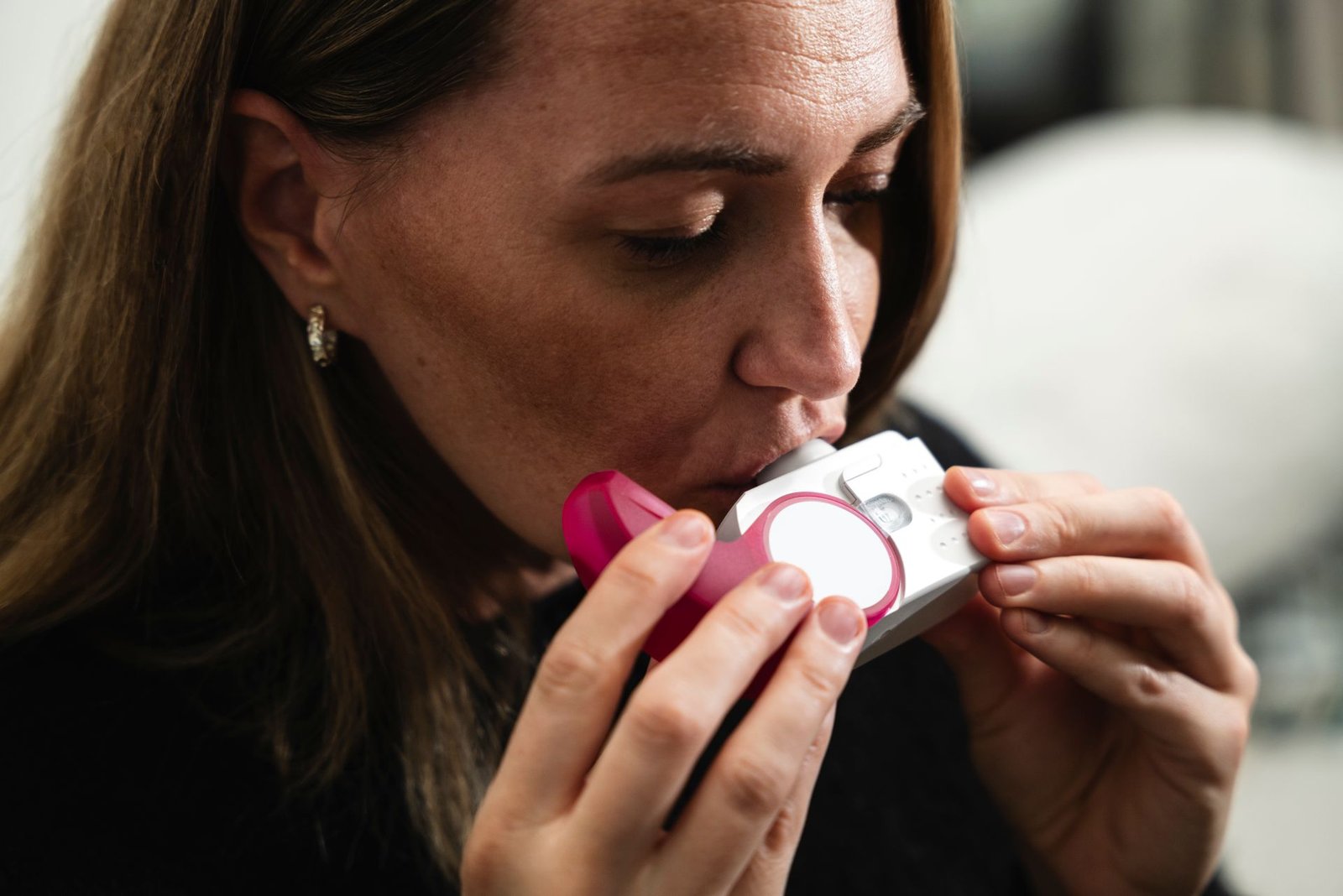
Imagine treating severe asthma with an injection just twice a year, and having it keep working just as well in the second year as it did in the first. That is the promise of depemokimab, a new biologic drug for severe asthma, and a two-year study published in The Lancet Respiratory Medicine in November 2026 suggests the promise is holding up. Patients who received the twice-yearly injection maintained their improvements in breathing and quality of life across two full years, with a safety profile that stayed consistent throughout.
Depemokimab is the first biologic with what doctors call an ultra-long duration of action. It is an antibody that blocks interleukin-5, or IL-5, a chemical messenger that drives a particular kind of inflammation in the airways. In people with severe asthma driven by eosinophils, a type of white blood cell, IL-5 keeps the airways inflamed, twitchy and prone to flare-ups. Blocking it calms that inflammation down. What makes depemokimab different from the other IL-5 drugs already on the market is how it was engineered: a stronger grip on its target and a longer half-life in the body, which means one injection every 26 weeks, two a year, instead of every two to eight weeks. It is given as a 100 milligram injection under the skin.
The new study is an integrated analysis of two years of data from the drug’s phase 3 programme. The first year came from SWIFT-1 and SWIFT-2, two double-blind, placebo-controlled trials in which patients aged 12 and older with eosinophilic asthma and type 2 inflammation were randomly assigned, two to one, to receive depemokimab or a placebo every 26 weeks for 52 weeks, on top of their standard inhaled treatment. These were people whose asthma was hard to control: they had suffered at least two flare-ups a year despite medium- or high-dose inhaled steroids. The second year came from AGILE, an open-label extension study in which 629 participants continued on the drug.
The results held up. The annualised rate of asthma flare-ups, or exacerbations, stayed low: 0.51 per year during the SWIFT trials and 0.56 during the AGILE extension, meaning the average patient had about one flare-up every two years. Improvements in lung function, measured by the amount of air a person can blow out in one second, and in quality-of-life scores were preserved across the two years. Patients who had received the placebo in the first year and then switched to depemokimab in the extension study also improved, catching up with the patients who had been on the drug from the start.
Just as important, the drug stayed safe. Adverse events were reported in 71 percent of patients who had been on depemokimab throughout and 70 percent of those who switched from placebo, and serious adverse events occurred in 9 percent of both groups, with no serious events related to the treatment and no deaths linked to it. Two years of continuous treatment did not reveal new safety problems, which is the question doctors always ask when a drug is given for a long time.
A separate analysis presented at the CHEST 2026 meeting in Phoenix looked at a goal that has become the new frontier in asthma care: remission. In asthma, remission means a year with no flare-ups, no need for daily steroid tablets, good symptom control and stable lung function. In the SWIFT and AGILE data, 30 percent of patients reached remission by the end of year one, and 59 percent of those patients were still in remission at the end of year two. Patients who were in remission in year one had far fewer flare-ups in year two, an annualised rate of 0.19 compared with 0.69 for those who had not reached remission, and their lung function improved by 379 millilitres on average, against 85 millilitres for the others. The message is that getting to remission early predicts a better second year, which gives doctors a reason to aim high rather than settle for “good enough” control.
Depemokimab is already approved in the United States. The FDA cleared it in December 2025, under the brand name Exdensur, as an add-on maintenance treatment for severe asthma with an eosinophilic phenotype in patients aged 12 and older. The original trials had shown it cut the annualised exacerbation rate by 54 percent compared with placebo, and the new two-year data strengthens the case that the benefit is durable rather than a short-lived honeymoon.
For the roughly 25 million Americans living with asthma, most of whom manage well on inhalers, this drug is not relevant. It is aimed at the smaller group, perhaps 5 to 10 percent, whose asthma stays severe despite inhaled steroids and other standard treatments, and whose lives are interrupted by flare-ups, emergency visits and courses of oral steroids. For those patients, the burden of treatment itself is part of the disease: remembering injections every few weeks, arranging appointments, missing work or school. A drug that works with two injections a year removes much of that friction, and better adherence is often the difference between controlled asthma and a crisis.
There are still open questions. The drug is new, so long-term data beyond two years is still being collected, and its price and insurance coverage will decide how many patients can actually get it. Doctors will also want to see how it compares head to head with the other biologics already available, which work well for many patients. But the direction of travel is clear: asthma treatment is moving from daily inhalers and frequent injections toward long-acting biologics that quiet the underlying inflammation for months at a time.
For patients with severe eosinophilic asthma who still struggle despite their inhalers, the new data is worth a conversation with a lung specialist. Two injections a year, with benefits that last and a safety record that has now held for two years, is a combination that would have sounded like science fiction a decade ago. Today it is a prescription.