
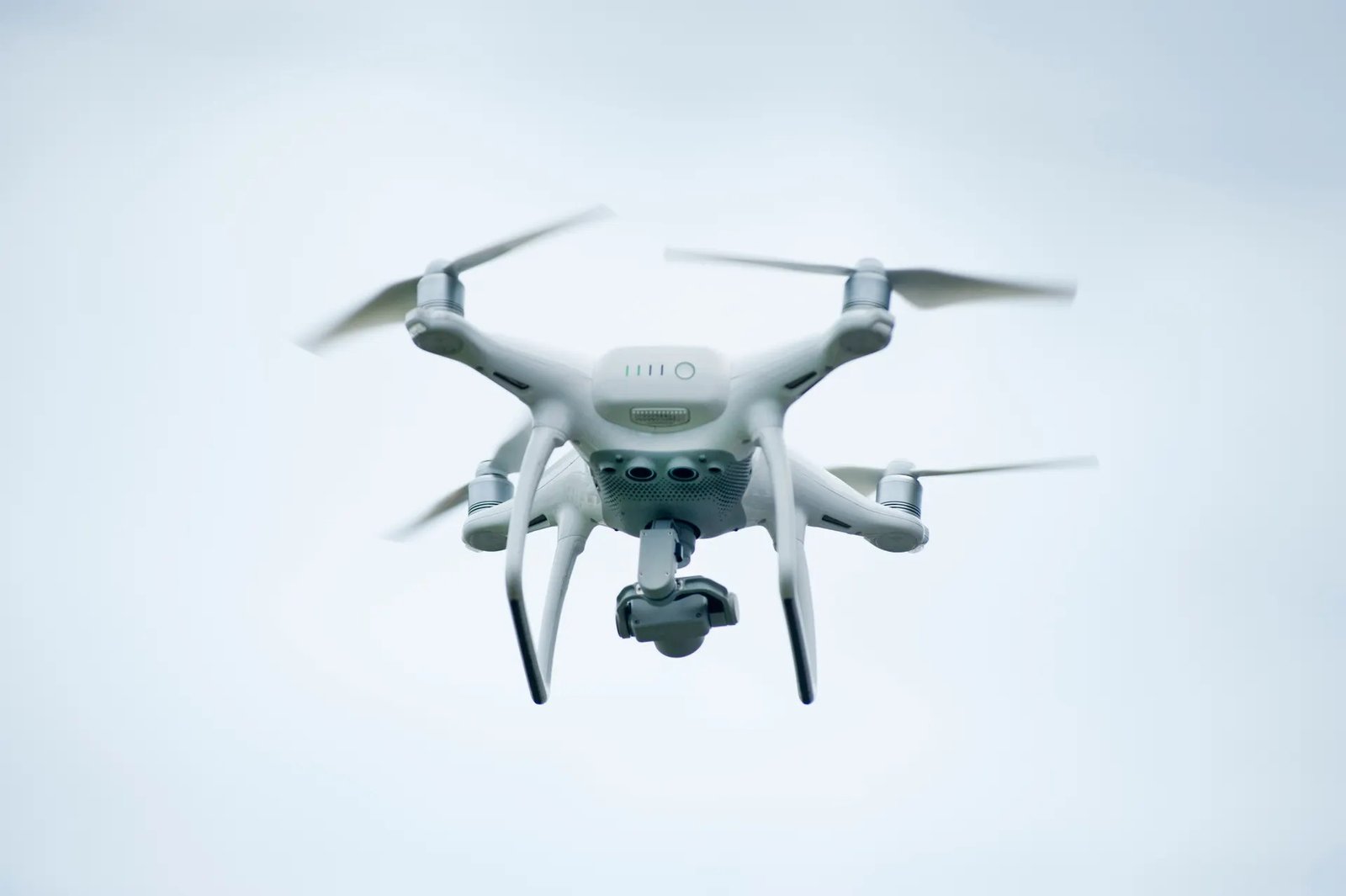
On Friday morning, in a prefecture famous for its views of Mount Fuji, a small aircraft lifted off a runway, flew 380 metres, and landed again. There was nothing unusual about the flight itself, except for one thing: there was a passenger on board, and there was no pilot.
The aircraft was EHang’s EH216-S, a two-seat, all-electric vertical take-off and landing craft built by the Chinese company EHang. The demonstration took place on 20 November at the Japan Aviation Academy in Kai, in Yamanashi Prefecture, in front of visitors and journalists. The aircraft, with 16 rotors and a glass cabin, followed a pre-programmed route along the runway. Inside, a lone passenger waved through the glass as cameras recorded the moment. A second, unoccupied flight later covered 1,800 metres above the nearby Kamanashi River.
Euronews reported the flight on Saturday, and footage from the news agency AFP showed the passenger riding in the aircraft during the demonstration. The event was described as Yamanashi’s first passenger demonstration of the EH216-S, and it was staged to introduce the public to urban air mobility and to test the potential for short-hop flights across Japan.
It was not the first time a pilotless EHang aircraft has carried a passenger in Japan. In February 2023, an earlier version of the aircraft flew with two passengers and no pilot along the coast at Tanoura Beach in Oita, a flight EHang described at the time as the first passenger-carrying flight for an autonomous electric vertical take-off and landing aircraft in Japan. That flight was conducted with the approval of Japan’s Ministry of Land, Infrastructure, Transport and Tourism. More recently, EHang announced passenger flights in Colombo, Sri Lanka, on 11 November. The Yamanashi demonstration is the latest stop on a long international tour.
The EH216-S itself is a modest machine by aviation standards, and that is the point. It is designed to fly up to 120 kilometres per hour and cover roughly 30 kilometres on a single charge. It takes off and lands vertically, so it needs no runway, and it flies itself, following a route programmed in advance. The idea is not to replace aeroplanes. It is to replace short car journeys in crowded cities, or to connect places that are hard to reach by road, such as islands, mountain towns, and the far side of a river.
That promise is what has kept governments and companies interested in flying taxis for a decade, and it is also what has kept them waiting. The technology to build a small electric aircraft that can lift a person into the air is no longer the hard part. The hard part is everything else: proving that it is safe, writing the rules for where it can fly, building places for it to take off and land, and persuading the public to climb into a machine with no pilot.
The Yamanashi flight illustrates both sides of that story. On the one hand, it worked, in public, with a passenger on board, and nothing went wrong. On the other hand, the details of what permission it flew under were not made public. EHang says the EH216-S received a type certificate in October 2023 and a production certificate in March 2024 from the Civil Aviation Administration of China, and that operators of the aircraft received China’s first air operator certificates for pilotless passenger aircraft in March 2025. None of the reports on the Yamanashi flight cited a Japanese type certificate for the aircraft, and none said what Japanese permission it flew under. That does not mean it flew without permission, but it does mean the regulatory picture is still unclear.
Japan, for its part, has a plan. A revised national roadmap issued on 27 March by the transport ministry and the Ministry of Economy, Trade and Industry calls for commercial flights to begin in certain regions between 2027 and 2028. It expects pilots to be on board as the norm in the early 2030s, with pilotless operations becoming mainstream only in the late 2030s. That is a careful, deliberate timetable, and it is a long way from the breathless predictions of a decade ago, when flying taxis were supposed to be ferrying passengers across cities by 2025.
The gap between the demonstration and the timetable is the real story of this flight. A 380-metre hop along a runway at an aviation academy is a controlled test, not a commercial service. It shows that the aircraft can fly with a passenger, but it does not show that it can fly safely over a city, in bad weather, with other aircraft around, or that it can do so day after day, profitably, with ordinary people on board. Those are the questions that will decide whether air taxis become a normal part of transport, or remain a curiosity that appears at airshows and in news reports.
None of that should take away from what happened in Yamanashi. A passenger climbed into a pilotless aircraft, it took off, it flew, and it landed, with Mount Fuji in the distance and a crowd watching. For the people who have spent years working on this technology, that is a real milestone. For the rest of us, it is a glimpse of a future that is arriving more slowly than promised, but arriving all the same. The next step is not another demonstration. It is the unglamorous work of certification, infrastructure, and regulation, and it will take years. The flight in Yamanashi was short. The road to a real air taxi service will be much longer.
EHang is not alone in this race. American companies such as Joby Aviation and Archer Aviation are developing their own electric air taxis, with pilots on board at first, and are working through certification with the US Federal Aviation Administration. Their approach is more cautious, and more expensive, but it may also be faster to market, because regulators are more comfortable with a pilot in the seat. EHang has bet the other way, arguing that removing the pilot removes the largest source of error and the largest operating cost. Which approach wins will depend less on the aircraft than on the rules, and the rules are still being written. What the Yamanashi flight proved is that the pilotless option works. What it did not prove is that the world is ready for it.