
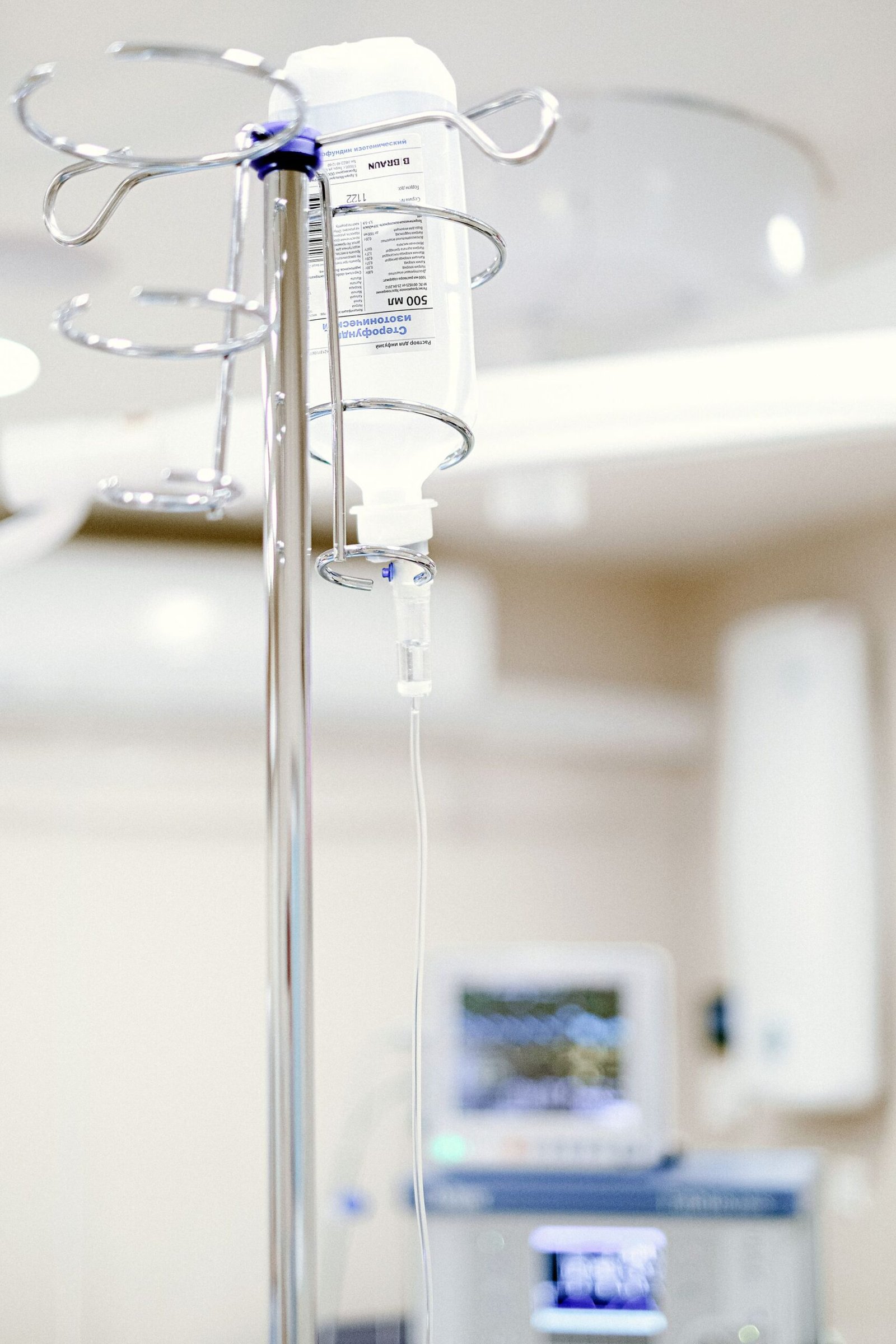
Hospitals across the United States are being told to pull 46 lots of six injectable drugs from their shelves after the manufacturer found that vials may contain tiny solid particles. The recall, announced by Par Health and posted by the US Food and Drug Administration on 24 November 2026, reaches the hospital and user level nationwide, and it includes drugs used in operating rooms, emergency departments and intensive care units, among them the only drug that can reverse a rare but deadly reaction to anesthesia.
The particles found in the vials are described as cellulose, polystyrene, stopper material and aluminum. That list tells its own story: these are fragments of packaging and manufacturing materials, not ingredients. How they got into the vials has not been explained. What matters is what they could do if injected. An injectable drug goes directly into the bloodstream, so anything solid in the vial travels with it. The company warned that using the affected products “has a reasonable probability of causing life-threatening adverse health consequences.” The risks it named include pulmonary emboli, blockages in the blood vessels of the lungs, blockages in other blood vessels that can starve tissue of oxygen and cause organ damage, and inflammation of vein walls that can lead to blood clots. Patients who are already critically ill, such as people with serious infections or those receiving transplant care, would be least able to tolerate those complications.
That warning language is significant. It matches the FDA’s most serious recall category, Class I, which covers products with a reasonable chance of causing serious harm or death. The FDA has not yet published a formal classification for this recall, but the company’s own wording leaves little doubt about how seriously hospitals should take it.
The six drugs involved are all hospital medicines, which shapes who needs to act. The largest share is Brevital Sodium, or methohexital, an ultra-short-acting barbiturate anesthetic used to start anesthesia and for procedural sedation. Twenty lots of the 500 mg vials are included. Methohexital is also one of the most commonly used anesthetics for electroconvulsive therapy, the treatment for severe depression, so patients receiving that care are among those who may have been given the drug. Fifteen lots of Dantrium IV, or dantrolene, are covered. Dantrolene is the drug used to treat and prevent malignant hyperthermia, a rare inherited reaction to certain anesthetics that can cause a rapid rise in heart rate and body temperature, muscle rigidity and muscle breakdown. Without dantrolene, malignant hyperthermia can be fatal within minutes, which is why every operating room keeps it on hand.
The recall also includes four lots of doxycycline for injection, an antibiotic also used to treat and prevent anthrax, and five lots of micafungin, an antifungal used for serious Candida infections and for prevention in stem cell transplant patients. One lot each of Coly-Mycin M, an antibiotic for serious gram-negative infections, and ethacrynate sodium, a diuretic used for fluid buildup, are also affected. Lot numbers and expiration dates for every product are listed in the FDA notice.
The scale of the problem is hard to pin down, because the lots were shipped to wholesalers and hospitals from 2 July 2024 through 17 September 2026, a period of more than two years. Many vials from these lots have probably already been used. Par Health said it has received no reports of adverse events tied to the recall, which is reassuring, but it also said it does not know how many vials actually contained particles. That uncertainty is exactly why the recall is so broad: when you cannot tell which vials are affected, you have to pull them all.
For patients and families, the key point is who must act, and it is not you. These drugs are given by clinicians in hospitals, not picked up at a pharmacy, so hospital pharmacies, not patients, must find and remove the affected vials. Wholesalers and hospital pharmacies have been told to stop using and distributing the affected lots immediately. Par is notifying customers in writing and arranging returns through Inmar Inc., and anyone who passed the product along must notify their own accounts. Facilities with questions can contact Inmar at 1-844-940-1986, Monday through Friday from 9 a.m. to 5 p.m. ET, or at rxrecalls@inmar.com. Product complaints and adverse events go to Par at 1-800-828-9393.
There is a practical worry hiding behind the recall. Some of these drugs have few substitutes, and several are used in emergencies where there is no time to look for an alternative. A hospital that pulls its recalled dantrolene vials needs enough replacement stock on hand for surgeries that use triggering anesthetics, because malignant hyperthermia can strike without warning. The notice did not report any shortage, but hospital pharmacies will be checking their shelves and their suppliers closely in the coming days.
People with surgery scheduled do not need to cancel. They can ask the surgical team or the hospital pharmacy whether recalled lots have been removed, especially if they or a relative have a history of malignant hyperthermia. Patients recently treated in a hospital who notice new symptoms, such as shortness of breath, a painful swollen arm near an IV site, or unexplained weakness, should seek medical care and mention their recent hospital treatment. Sudden shortness of breath or chest pain needs emergency help. Most people treated with these drugs will not have been exposed to an affected vial, and no injuries have been reported. People with a family history of malignant hyperthermia should tell any surgical team before anesthesia, a step that matters with or without a recall. Patients with concerns about a past treatment can ask their care team whether hospital records show which lots were used.
The recall also raises a question that goes beyond one company. Par Health USA, based in Rochester, Michigan, is the current distributor, and the release lists Par Pharmaceutical and Endo USA as predecessor companies. The same week brought another large drug recall, with a Texas compounding pharmacy pulling 261 products over sterility concerns, and just days earlier a nationwide recall of prescription ibuprofen over aluminum particles on tablets. Taken together, these recalls paint a picture of a drug supply chain under strain, where quality problems at a single plant or pharmacy can ripple across the country before anyone notices.
For hospitals, the message is to check the lot numbers now. For everyone else, the message is simpler: the medicines you receive in a hospital pass through many hands before they reach your IV line, and this week the system caught a problem before it caused reported harm. That is how recalls are supposed to work. The next step is making sure every affected vial is found, and that the drugs hospitals rely on in emergencies are there, and safe, when they are needed.