
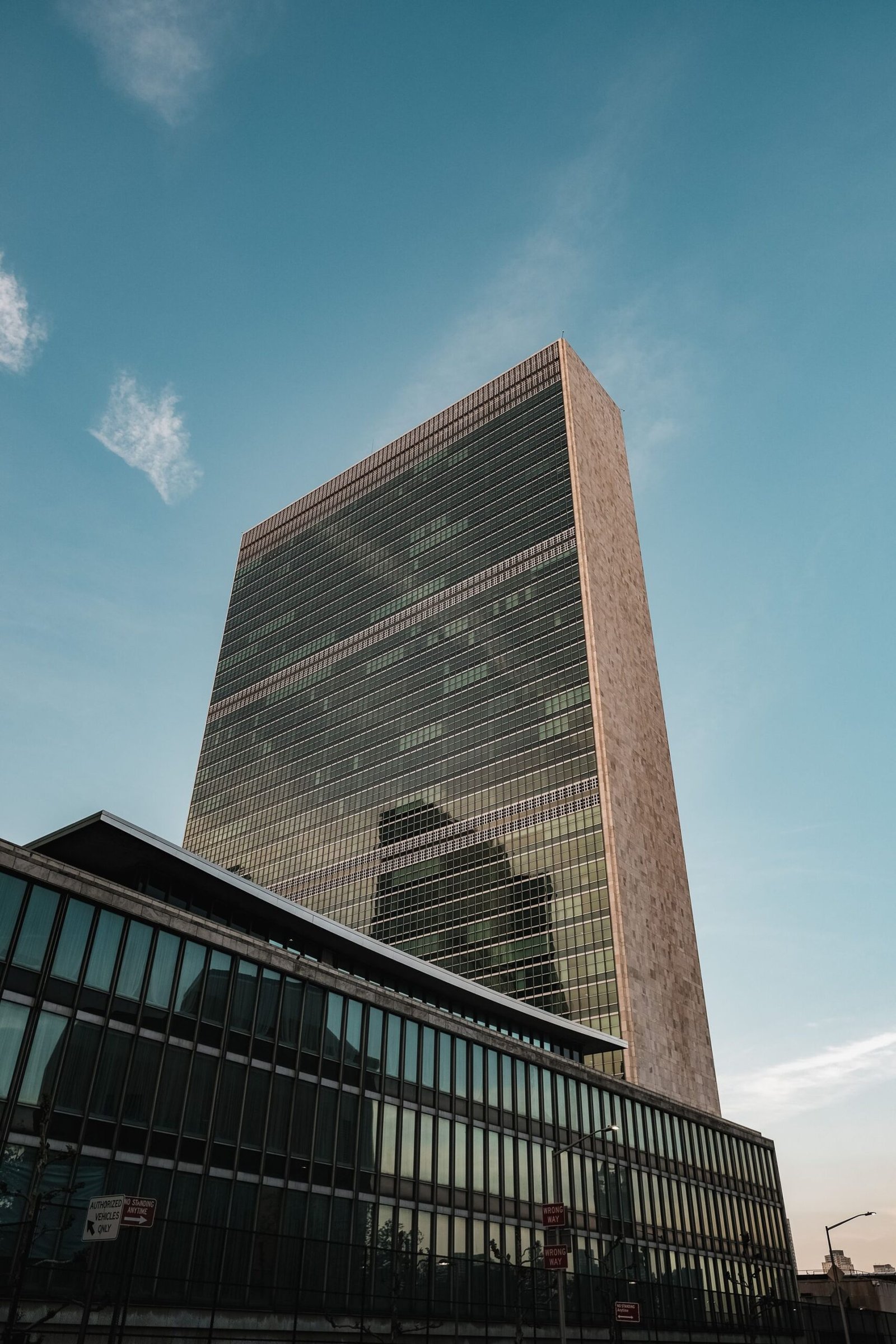
The United Nations Secretary-General, Antonio Guterres, has called on the world’s governments to agree within a year on a shared set of rules for managing the risks of artificial intelligence, warning that the technology is shifting power away from states at a speed that existing institutions cannot match.
Guterres made the appeal on Monday at the close of the Bridgetown Special Summit on AI Safety in Barbados, a gathering the UN co-hosted with the Barbadian government that brought together scientists, government representatives, technology companies and civil society. It was, in his own telling, a final act of sorts: his term as Secretary-General ends in December, and he used one of his last major speeches in the job to put AI governance at the top of his successor’s in-tray.
“Today I call for member states to coordinate efforts and to develop within the next year a globally inclusive and principles-based multilateral framework for AI risk management, backed by independent and credible oversight,” he said.
The language was deliberately careful. A “framework” is not a treaty, and “within the next year” is a target rather than a deadline. But the warning behind it was not careful at all. Guterres described AI as driving “the biggest transfer of power in the history of humankind”, with power shifting “from states, from governing institutions to a small number of companies and persons”. Institutions built after the Second World War, including the UN itself, were not equipped to deal with it, he said, and the gap between those who build AI systems and those who are affected by them is widening by the month.
The proposal has three practical starting points. Countries would agree on common safety standards for advanced AI systems, on shared approaches to testing them before they are released, and on minimum requirements for independent supervision of the most powerful models. Behind those technical steps sits a bigger political idea: that the risks of AI do not stop at borders, and that no single country, however powerful, can manage them alone.
Guterres also floated a Global Fund for AI Capacity-Building, aimed at helping poorer countries test whether AI systems work safely in their own languages and settings, and at narrowing the gap between rich and poor nations in a technology that is otherwise likely to concentrate its benefits in a handful of wealthy states. It is a familiar argument from a Secretary-General who has spent much of his tenure warning that the digital revolution, left to itself, will deepen inequality rather than reduce it.
The summit itself was a sign of how far the debate has travelled. Barbados, a small island state of fewer than 300,000 people, hosted the gathering, and its Prime Minister, Mia Mottley, has become one of the most prominent voices in the world arguing that small countries should have a say in how powerful technologies are governed. French President Emmanuel Macron addressed the summit by video, telling delegates that the Paris Call for AI Security had now been signed by 18 heads of state and government and 11 AI industry leaders, and arguing that accepting its principles should be a condition for access to markets.
Not everyone at the summit agreed on how far or how fast to go. The technology industry has generally favoured voluntary standards and resisted binding rules, while many governments are wary of any framework that might slow their own AI industries. The proposal Guterres put forward is, for now, a call to governments rather than an adopted agreement. No framework has been drafted, no text has been published, and its technical content has not been specified. What exists is a one-year target and a list of building blocks: shared safety measures, common testing, transparency requirements, independent evaluation, and support for countries that cannot afford to do this on their own.
The risks Guterres cited are not abstract. Autonomous weapons capable of killing without human intervention were among the examples raised at the summit, and the UN has warned for years about AI-controlled weapons systems that could make life-and-death decisions without meaningful human control. Beyond the battlefield, the concerns range from AI-generated disinformation that can distort elections, to systems that entrench discrimination, to the simple fact that nobody fully understands how the most advanced models reach their conclusions.
There is also a question of timing. Guterres steps down at the end of December, and his successor is expected to take office in the New Year. The twelve-month target for the framework therefore falls squarely within the transition period, and Guterres said he would advise his successor to make effective AI governance a priority. Whether the next Secretary-General picks up the baton with the same urgency remains to be seen.
The history of global technology governance is not encouraging. The internet grew up largely without international rules, and the world is still arguing about who should govern it. Nuclear weapons took decades to bring under even partial control. AI is moving faster than either, and the window for shaping it is narrower. That, in essence, is the argument Guterres was making in Barbados: that the world has about a year to start building the institutions it needs, and that the alternative is to let a small number of companies and countries set the rules by default.
It is a big ask, and the odds of a comprehensive framework emerging in twelve months are, on any honest reading, slim. But summits like the one in Bridgetown are where such ideas stop being speeches and start becoming negotiations. The test will be whether governments come back to the table in the coming months with draft text and real commitments, or whether the call for a global framework joins the long list of UN appeals that were applauded in the room and forgotten on the way home.