
China has unveiled the crew for its Shenzhou-24 mission, announcing that a Pakistani astronaut will become the first foreign visitor to its Tiangong space station when the spacecraft launches on Wednesday, in a flight that marks a new chapter for China’s space programme and for Pakistan alike.
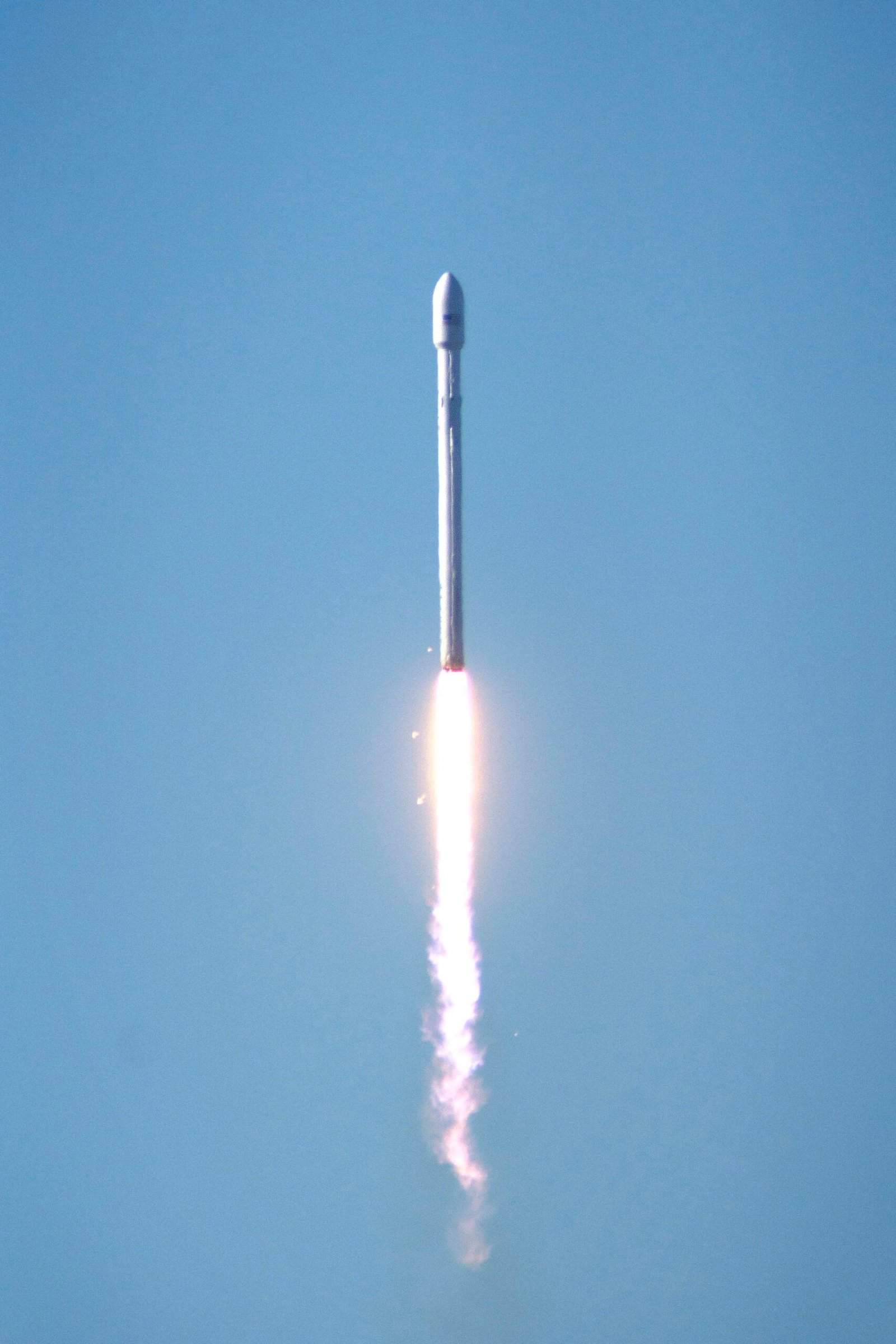
The China Manned Space Agency announced on Tuesday that the Shenzhou-24 spacecraft will lift off at 8:18am Beijing time on Wednesday from the Jiuquan Satellite Launch Centre in north-western China, carried by a Long March 2F rocket. The three-person crew consists of commander Tang Hongbo, flight engineer Wu Yi, and Pakistani payload specialist Muhammad Zeeshan Ali. The crew is in good condition and launch preparations are complete, the agency said.
For Ali, 40, the flight is the fulfilment of a dream that, until a few years ago, would have seemed out of reach. A former air force pilot, he will become the first Pakistani national to travel to space, and the first foreign astronaut ever to board Tiangong. He is scheduled to spend about a week aboard the station before returning to Earth on the Shenzhou-23 spacecraft. When the three astronauts met reporters at a news conference at Jiuquan on Tuesday, Ali thanked the Chinese government for helping him make his dream come true.
The mission is the culmination of a cooperation agreement signed by China and Pakistan in February 2025 on selecting and training Pakistani astronauts for participation in Chinese space station missions. Following three rounds of screening and assessment, Ali and Khurram Dawood were selected as candidates and completed their training in China. Ali has now been confirmed for the historic flight, while Dawood will serve as his backup.
Tang Hongbo, 51, is the veteran of the crew. He previously flew to Tiangong on Shenzhou-12 and Shenzhou-17, and is about to become the first astronaut to visit China’s space station three times. Wu Yi, 39, comes from the country’s third batch of astronauts and will be making his first spaceflight, serving as flight engineer. The combination is deliberate: an experienced commander, a first-time engineer, and a guest astronaut whose presence is the point of the mission.
Shenzhou-24 is the 41st flight mission of China’s crewed space programme, and will complete an in-orbit rotation with the Shenzhou-23 crew. In keeping with previous Chinese crewed missions, the crew was announced one day before the planned launch. The mission will be the 18th crewed Chinese spaceflight and the 24th flight overall of the Shenzhou programme. China’s Shenzhou missions have sent trios of Chinese astronauts to Tiangong for six-month stays since 2021, and the station has been continuously occupied since then. One member of the outgoing Shenzhou-23 crew, Zhu Yangzhu, will be staying in space for a year-long mission, the agency said.
The significance of the flight goes beyond the crew list. It will be the first joint crewed spaceflight involving Chinese and foreign astronauts in the history of China’s human spaceflight programme, and it will make Tiangong the first Chinese space station to host a foreign astronaut. For China, it is a demonstration that its space station is open for business, and that the Tiangong programme, built after China was excluded from the International Space Station, can now offer other countries a route into orbit. For Pakistan, it is a moment of national pride and a tangible product of a relationship with Beijing that spans trade, infrastructure and defence, and now extends into space.
It is also a reminder of how quickly the geography of human spaceflight is changing. For decades, the International Space Station was the only place where astronauts from different countries lived and worked together, and the path to orbit ran through Washington or Moscow. Tiangong, completed in 2022, is now a second destination, and Shenzhou-24 is the first mission to carry a foreign guest there. Other countries have expressed interest in sending astronauts to the Chinese station, and the success of this flight will be watched closely by space agencies weighing their options.
Ali’s week aboard Tiangong will be short by the standards of a normal mission, and his duties as a payload specialist will centre on scientific experiments rather than station operations. But the symbolism of the flight does not depend on its duration. Pakistan becomes the latest country to put a citizen in orbit, and the first to do so through China’s programme. The photographs from Tuesday’s news conference, showing Ali standing between his two Chinese crewmates in their flight suits, will be reproduced in newspapers in Islamabad and Beijing alike, and for good reason: they capture a partnership that both governments want the world to see.
There are, inevitably, questions about what comes next. China has said it wants to expand international cooperation on Tiangong, and the selection of a Pakistani astronaut is widely seen as the first step in a broader programme of guest flights. Whether other countries follow, and whether Tiangong eventually hosts astronauts from Europe or elsewhere, will depend on politics as much as on engineering. Spaceflight has always been a mixture of science and statecraft, and Shenzhou-24 is no exception.
For now, the countdown is under way at Jiuquan, in the Gobi Desert, where the Long March 2F stands ready on the pad. At 8:18 on Wednesday morning, if all goes to plan, three men will leave Earth together: a commander on his third visit to the station, an engineer on his first flight, and a Pakistani pilot making history. A week later, one of them will come home on a different spacecraft, having spent his days in orbit as a guest. The station he leaves behind will be, in a small but real sense, a more international place than it was before.