
The police had already spoken to him once that morning. They had warned him about the surf, told him to keep his distance, and written him a ticket. Less than two hours later, he was in the ocean anyway — swept off his feet by a wave, his dog dragged in beside him, in front of a camera that was rolling.
The video, filmed by a bystander at Cannon Beach on the Oregon coast on Tuesday, November 24, has now been watched by millions. It shows a man standing on the concrete stairs of a beach access point, his leashed dog walking on the sand below, as a massive surge of water races up the shoreline. In a matter of seconds the dog is pulled into the surf, the man is yanked off his feet as he grips the leash, and both of them vanish into the churning water.
By some miracle, both survived. The man scrambled to another set of stairs and climbed out of the water. His dog was rescued by bystanders a little further down the seawall, who climbed down a ladder, grabbed the animal by its harness and lifted it back to safety. Neither was seriously hurt, though fire crews said the man suffered mild hypothermia from his time in the freezing Pacific. The dog, by all accounts, was shaken but fine.
What makes the footage so hard to watch is not just the wave. It is what happened before it. At approximately 8:50 a.m. that morning, a Cannon Beach police officer spotted the man driving on the beach just south of Tolovana Wayside. The man said he wanted a closer look at the king tides — the exceptionally high tides that arrive with certain lunar cycles and had been running along the Oregon and Washington coasts from November 23 to 27. The officer issued him a citation for driving on the ocean shore and warned him, in plain terms, to stay off the beach and observe the tides from a safe distance because of how unpredictable they are.
Around 10:30 a.m., police and firefighters were called to Ecola Creek for a report of a person and a dog being swept into the surf. When they arrived, they determined it was the same man they had spoken to less than two hours earlier.
Cannon Beach Police Chief Rob Shultz, who had personally spoken to the man that morning, did not hide his frustration. “King Tides are an impressive natural phenomenon, but no photograph, video, or closer look is worth risking your life, the life of your pet, or the lives of the first responders who may be called upon to rescue you,” the department said in a statement. Shultz added that the department was relieved the incident did not end in a fatality — because it very easily could have.
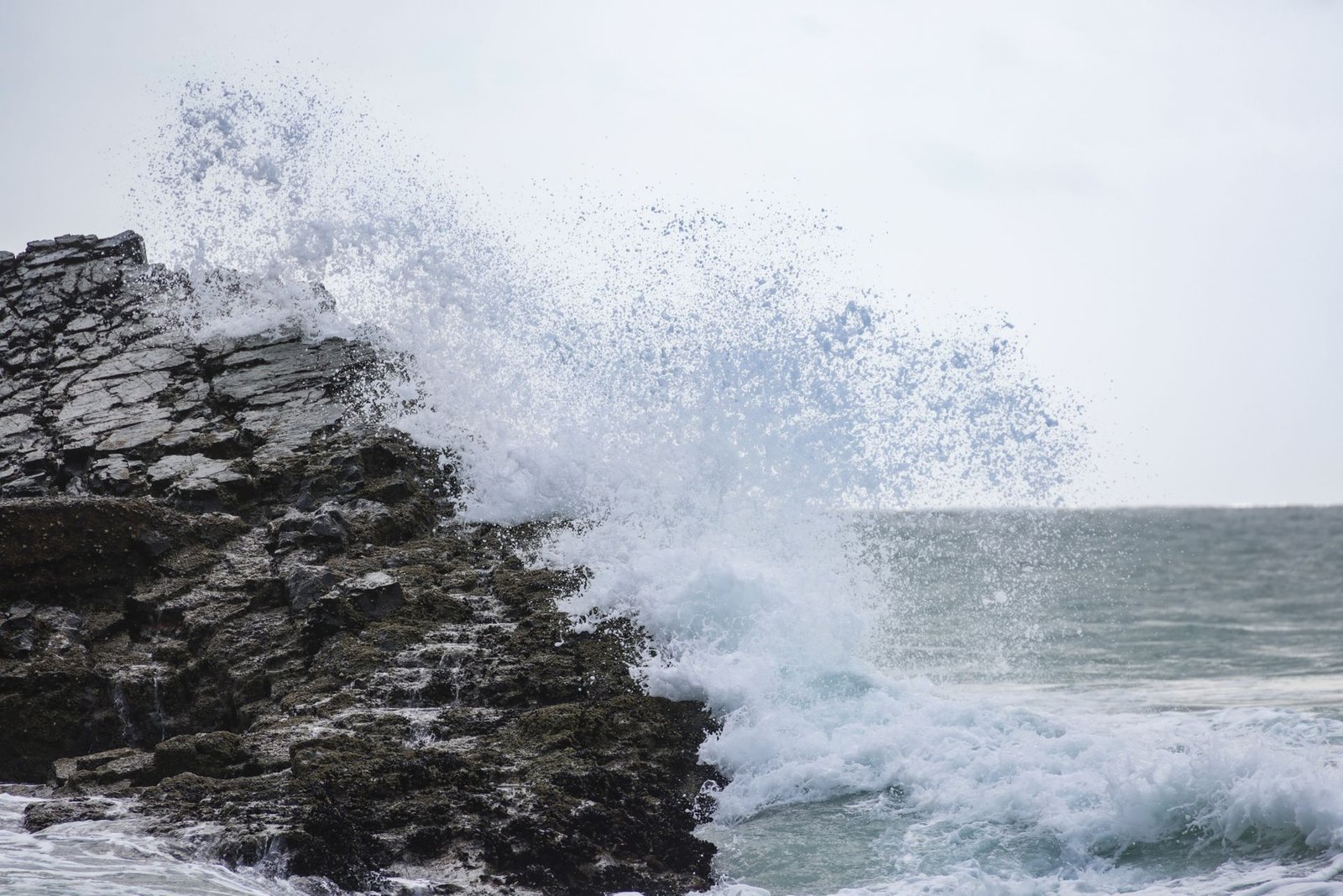
He is right, and the timing made it worse. The king tides that week were fuelled by a historic El Niño and a full supermoon — the Beaver Moon, which peaked on November 24 — sending substantial swell toward Oregon’s steep, exposed coastline. These tides do not arrive as a steady rise of water. They arrive as sneaker waves: sudden, powerful surges that race far further up the beach than the waves before them, with no warning at all. A staircase that looks perfectly safe can be underwater in seconds. That is exactly what the video shows.
Nor was this the only close call on the coast that week. Elsewhere along Oregon’s shoreline, a child was pulled to safety at Cannon Beach, and a dog was rescued after a wave struck beachgoers at Winchester Bay. The pattern is familiar to anyone who lives on the coast: the tides draw crowds, the crowds edge closer for a better photo, and the ocean, which does not care about your plans, reminds everyone who is in charge.
The man in the video has not been publicly identified, and no further charges beyond the morning’s ticket have been detailed. He walked away unharmed, and so did his dog, and in the end that is the only outcome that matters. But the footage will be shown in safety briefings for years, because it captures something no warning sign ever quite manages: the exact moment when confidence meets a force that does not negotiate.
The police advice, repeated after the incident, is simple and worth repeating here. Watch king tides from a safe, elevated location. Keep pets away from the surf. Never turn your back on the ocean, and never assume the wave you are watching is the biggest one coming. The ocean is unforgiving, as the Cannon Beach department put it — and on Tuesday morning, a man and his dog found out just how quickly it can prove the point, even to someone who had already been told.
It is worth understanding what a king tide actually is, because the name makes it sound rarer and more dramatic than the science suggests. King tides are simply the highest tides of the year, arriving when the moon is at its closest to Earth and the sun, moon and Earth line up to pull the ocean a little further than usual. They happen several times a year on the West Coast, usually in the winter months, and they are predictable — tide tables will tell you exactly when they are coming. What is not predictable is the sneaker wave: the one surge, often the seventh or eighth in a set, that runs far further up the beach than the ones before it. Lifeguards call them sneaker waves for a reason. They arrive without announcement, and by the time you see one coming, it is already on top of you.
That is why the Cannon Beach footage has travelled so far beyond Oregon. It is not just a dramatic clip. It is a perfect, terrible demonstration of a phenomenon that coastal authorities have been warning about for years, compressed into thirty seconds of video. The man is not standing in the water. He is not swimming. He is standing on concrete stairs, on dry land, holding a leash — and then he is not. The dog is on the sand, not in the surf — and then it is gone. The speed of it is the point. Nobody in that video did anything obviously reckless in the moment the wave hit. The recklessness was in being there at all, after being told not to be.
For the rest of us, the takeaway is not complicated. The coast is beautiful, the tides are spectacular, and the photographs are tempting — but the ocean does not pose for pictures, and it does not give second chances. Watch from high ground, keep your dog on a short lead and well back from the waterline, and if a police officer tells you the beach is dangerous, believe them. The man at Cannon Beach was told twice. He was lucky. Next time, someone might not be.